
On 18 December 2025, Belgium submitted an intervention to the ICJ in South Africa’s Application on the Convention on the Prevention and Punishment of the Crime of Genocide against Israel’s conduct in the Gaza Strip. Belgium’s intervention focuses on the interpretation of the special intent (dolus specialis) required for the existence of the crime of genocide. Its claims are threefold: (a) the existence of an armed conflict; (b) the pursuit of a military objective, or (c) IHL considerations cannot preclude the identification of genocidal intent (Belgium, par. 19).
Regarding the existence of an armed conflict, Belgium relies on the Court’s 23 January 2020, decision in the Gambia v. Myanmar Genocide Convention case, in which the Court held that a State Party to the Convention remains bound by its obligations even during an armed conflict (p. 27-28, par. 74). It also notes that international courts have recognized genocide during armed conflict in Rwanda, Srebrenica, and Cambodia, and that national courts have similarly recognized ISIS’s genocide of Yazidis during an armed conflict (See ICTR Prosecutor v. Kayishema and Ruzindana, par 344, 345 and 597; ICTY Prosecutor v. Krstic, par. 598 and 481; ECCC Prosecutors v. Chea and Samphan, par. 336, 3348 and 3519).
Furthermore, a belligerent may have as its military objective the destruction of a protected group. Alternatively, the destruction of a group may be the means of achieving the military objective (Croatia v. Serbia, 2015, Dissenting Opinion Judge Cancado Trindade, p. 253, par. 144).
Finally, the legal framework governing the crime of genocide is distinct and autonomous from International Humanitarian Law (IHL), meaning the two bodies of law pursue different objectives and apply regardless of whether acts occur during peace or war. According to Belgium’s position, this independence implies that an action can simultaneously constitute both a war crime and genocide. Crucially, compliance with IHL does not shield an actor from genocide charges if the specific intent (dolus specialis) is proven. While the two regimes remain legally separate, they are factually linked; for instance, evidence of military targeting that is disproportionate, fails to distinguish between civilians and combatants, or targets vulnerable groups such as children can serve as critical indicators of genocidal intent (Belgium, par. 40-44).
This article argues that while the 1948 Genocide Convention remains fully applicable during armed conflict, the devastating outcomes of modern urban warfare must not be legally conflated with the specific intent (dolus specialis) required to prove the “crime of crimes.” Central to this thesis is the “only reasonable inference” standard established by the ICJ, which holds that if a pattern of conduct can be reasonably explained by a legitimate military objective the high evidentiary bar for genocide is not met. Or, as the ICJ directly put it: “The dolus specialis, the specific intent to destroy the group in whole or in part, has to be convincingly shown by reference to particular circumstances, unless a general plan to that end can be convincingly demonstrated to exist; and for a pattern of conduct to be accepted as evidence of its existence, it would have to be that it could only point to the existence of such intent.” (Bosnia v. Serbia, par. 373). By analyzing recognized historical genocides in Rwanda, Srebrenica, and Cambodia, this article will demonstrate that genocidal intent is evidenced by systematic, state-organized atrocities that occur in parallel with, rather than as an incidental byproduct of, active combat operations. Furthermore, it contends that International Humanitarian Law (IHL) is neither an autonomous nor an irrelevant regime in these proceedings, but rather the essential interpretive framework through which military conduct and intent must be assessed. Ultimately, the article maintains that adopting Belgium’s “means to an end” framework would dangerously dilute the legal definition of genocide, transforming it from a crime of specific purpose into a crime of result.
- The “Only Reasonable Inference” Standard (The Highest Hurdle)
While Belgium relies heavily on the dissenting opinion of Judge Cancado Trindade, the majority opinion in Croatia v. Serbiaupheld that genocidal intent must be the “only reasonable conclusion to be drawn” from a pattern of action (par. 148 and 407). To that effect, the Court held that Serbia’s ethnic cleansing of Croats from Serbia could not be explained with genocidal intent as the only reasonable inference to be drawn (par. 428). The Court noted that genocidal intent could not be inferred from the events at Vukovar, dealt with in Mrksic case(par. 470-471), in which massive and well-armed Serb forces systematically destroyed the Croat civilians and military of the city. The “terrible fate that befell the city and the people of Vukovar” (Mrksic par. 471) was motivated by Serbia’s desire to punish its people and assert control over the SFRY, not to destroy a protected group.
While the existence of an armed conflict does not preclude genocide, the “only reasonable inference standard” holds that if a pattern of conduct can be reasonably explained by a legitimate military objective (such as neutralizing combatants, destroying tunnels, or constraints of urban warfare), then the standard for genocide is not met.
- Challenging the “Means to an End” Theory
A central pillar of Belgium’s intervention is the proposition that a state’s pursuit of a military objective—or even the use of group destruction as a ‘means’ to that objective—cannot preclude a finding of genocidal intent. However, this interpretation risks bypassing the 1948 Genocide Convention’s most stringent requirement: the need to prove dolus specialis, or the specific intent to destroy a protected group, as such. While Belgium correctly notes that genocide can occur in armed conflict, its ‘means to an end’ framework fails to sufficiently distinguish between the tragic, large-scale collateral consequences of modern urban warfare and the focused mental state required for the ‘crime of crimes.’ Conflating the devastating impact of a military campaign with the intent to destroy a people would dilute the legal definition of genocide, transforming it from a crime of specific purpose into a crime of result.
The Drafters of the Genocide Convention recognized that, while war and genocide could occur concurrently, the existence of genocide could not be inferred from the harsh conditions or high civilian casualties brought about by war:
The infliction of losses, even heavy losses, on the civilian population in the course of operations of war, does not as a rule constitute genocide. In modern war, belligerents normally destroy factories, means of communication, public buildings, etc., and the civilian population inevitably suffers more or less severe losses. It would of course be desirable to limit such losses. Various measures might be taken to achieve this end, but this question belongs to the fi eld of the regulation of the conditions of war and not to that of genocide.
War may, however, be accompanied by the crime of genocide. This happens when one of the belligerents aims at exterminating the population of enemy territory and systematically destroys what are not genuine military objectives. (Secretariat Draft E/447, p.231)
Returning to Croatia v. Serbia, the Court examined the 1995 Croatian military offensive “Operation Storm,” which resulted in the mass displacement of over 200,000 Serbs and the killing of civilians. The ICJ concluded that while the actus reus of genocide might have occurred (par. 499), the specific intent was absent. The Court held that the Croatian authorities sought to remove the Serbian population to serve a political/military goal. However, it could not be inferred that such a goal was genocidal. The Court explicitly held that “if the shelling of towns can be explained by military necessity or a desire to force a population to flee, then genocidal intent is not the ‘only reasonable inference” (par. 475 and 503).
Jens David Ohlin’s analysis in Targeting and the Concept of Intent offers a vital counter-framework to Belgium’s claim that military objectives cannot preclude genocidal intent. Ohlin argues that International Humanitarian Law (IHL) recognizes a “gray zone” in which a commander may anticipate high civilian casualties as a “tragic consequence” of an attack on a legitimate military objective, provided those casualties are proportional to the anticipated military advantage. Within this framework, civilian deaths are foreseen but unintended—a cognitive state that differs fundamentally from the purposive goal of group destruction.
- Critical Analysis of Cited Precedents
Belgium’s statement that genocides occur during war is trivial. This misrepresents the fact that no recognized case of genocide was carried out to pursue a military purpose, was incidental to military objectives, or took place within active combat zones where civilian presence is intermingled with military targets. Instead, precedents show that genocidal acts are systematically organized and distinct from the surrounding conflict:
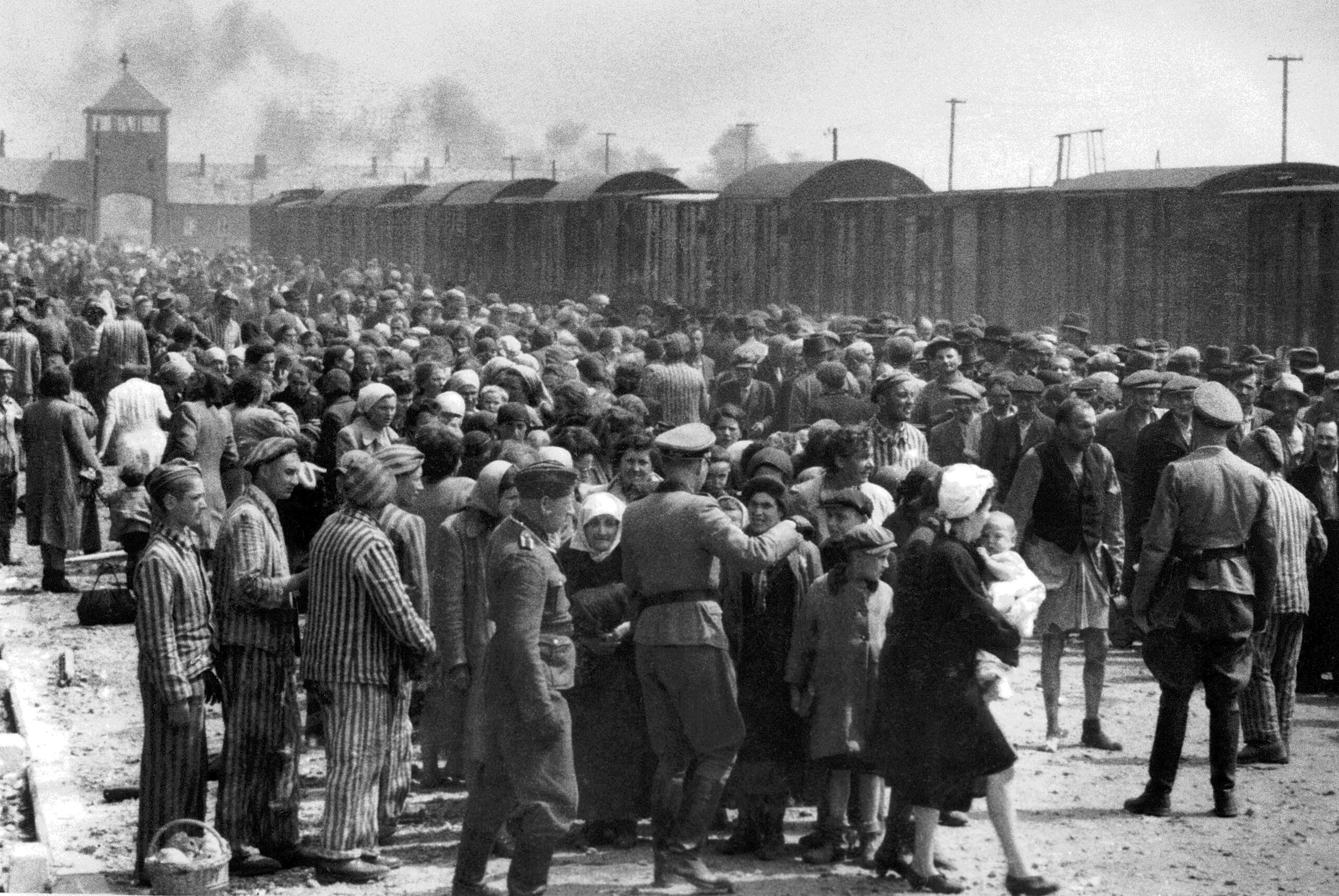
The Nazi’s genocide of European Jewry was carried out in parallel to its war effort. As the Nuremberg Tribunal stated, “the persecution of the Jews… is a record of consistent and systematic inhumanity on the greatest scale” (Trials of the Major War Criminals Before the International Military Tribunal, Nuremberg, 14 November 1945 – 1 October 1946, Volume 1, p. 243). The murder of Jews was carried out methodically, with the Jews of the Soviet Union killed by the SS’s mobile killing units and millions more gassed in death camps in occupied Poland.
The ICTR held that the Rwandan genocide was “fundamentally different from the conflict” between Hutu and Tutsi armed forces (Prosecutor v. Akayesu, par. 128). The attacks by the Interahamwe against Tutsis were unhelpful to the Rwandan army. The Tribunal noted that the genocide was “meticulously organized” – roadblocks were set up in Kigali and around the country by Hutu soldiers and civilians. Tutsis were sorted out and killed, sometimes on the spot. There were death lists of Tutsis to be killed, arms caches in the capital, training of militiamen by the Rwandan Armed Forces, and the psychological preparation of the population to commit genocide against the Tutsis (par. 123 and 126).
At Srebrenica, the executed Croats were not active combatants; they were prisoners of war or civilians in a “captured” environment, separated from the rest of the population. Because the victims were detained and the territory was fully under the control of the Bosnian Serb forces (VRS), the systematic executions could not be reasonably explained by the “necessity of battle” or the “constraints of urban warfare.” The Trial Chamber rejected the Defense’s argument that the killing of the men was motivated solely by the need to eliminate a military threat. The Bosnian forces did not distinguish between civilians and combatants. These civilians did not pose a military threat; even the severely handicapped were killed. The Bosnian forces killed boys and elderly men outside the military age range (Prosecutor v. Krstić, Par. 547, 593 and 594).
Finally, the Extraordinary Chambers in the Courts of Cambodia (ECCC) convicted Khmer Rouge leaders Chea and Samphan of genocide during the during the Khmer Rouge regime’s rule from 1975 to 1979. The Communist Party of Kampuchea (CPK) executed a deliberate and systematic policy of genocide against ethnic Vietnamese and Cham Muslims through a highly organized state machinery. For the Vietnamese, this was marked by a definitive policy shift in 1977 from forced expulsion to extermination, where victims were identified through centrally maintained lists and biographies and executed at security centers under direct orders from the CPK’s upper echelon. Similarly, the systematic nature of the campaign against the Cham involved forced dispersal into Khmer villages to break communal bonds, the destruction of religious symbols, and mass executions (Prosecutor v. Nuon Chea and Khieu Samphan).
Crucially, while every recognized genocide in history has occurred during an armed conflict, it has remained factually distinct from that conflict; it has involved systematic atrocities such as mass executions, torture, and state-ordered extermination. To date, there is no legal precedent for a finding of genocide resulting from collateral civilian damage in an active war zone. Therefore, Belgium’s attempt to equate the devastating outcomes of high-intensity urban combat with the purposive, systematic destruction seen in Srebrenica or Cambodia lacks a basis in established international case law.
- The Relationship Between IHL and the Genocide Convention
Belgium’s claim that IHL considerations cannot preclude the intent to commit genocide is contradictory. If a military operation adheres to IHL principles such as distinction and precaution, it cannot at the same time be claimed that the operation is motivated by a “specific intent to destroy” a protected group.
In a long line of cases, international tribunals have consulted IHL to determine adherence to other human rights obligations. In its Advisory Opinion on the Legality of the Threat or Use of Nuclear Weapons, the Court held that it could not rule the use of nuclear weapons inherently illegal when used in accordance with IHL principles (par. 95). In the al-Skeini decision, the European Court of Human Rights assessment of the “procedural duty” under Article 2 of the European Convention of Human Rights (Right to Life) heavily analyzed the context of armed conflict and occupation to determine what constitutes a “compliant” investigation. The ECHR examined the UK’s duties as an Occupying Power under IHL as well as its standards into military investigations of into civilian deaths. The Court held that the ECHR cannot be interpreted in a “vacuum”, but rather harmoniously with other rules of international law, including IHL. Similarly, in theLa Tablada case, the Inter-American Commission on Human Rights applied IHL to determine whether Argentina violated the “Right to Life” protected under the American Convention on Human Rights.
In conclusion, the intersection of IHL and the Genocide Convention necessitates a harmonious legal interpretation rather than the disconnected approach proposed by Belgium. International tribunals consistently look to IHL to define the scope and feasibility of state obligations within the context of armed conflict. If a state’s military operations are found to be in adherence with IHL principles—specifically those of distinction, precaution, and proportionality—it creates a fundamental legal barrier to the inference of genocidal intent. Because dolus specialis requires a purposive goal of destruction, the existence of a valid military justification under IHL provides a ‘reasonable alternative’ that prevents genocidal intent from being the only logical conclusion. Ultimately, upholding the distinct but factually linked nature of these regimes ensures that the ‘crime of crimes’ remains reserved for systematic, state-ordered extermination rather than the tragic, yet legally regulated, outcomes of high-intensity urban warfare.