
By: Eli Kenin
The Sabra cactus (Opuntia), whose pads bear the sweet prickly-pear fruit beneath a spiny rind that came to symbolize the native-born Israeli, is not native to the region. Brought from Mexico to the Middle East in the sixteenth century,[1] its strong roots—able to store water and endure the harshest conditions—gave it the appearance of belonging naturally to a land of nomads and returning exiles. The Bedouins, whose roots lie in the desert, recognized these traits and named the plant sabr, from the Arabic word for patience. In Hebrew, sabr became Sabra—a name that came to describe those born in their reclaimed homeland: tough on the outside yet tender within, like the prickly pear itself. The past two years have made this old metaphor worth revisiting, as the qualities it represents have re-emerged in Israeli society’s response to a war that has upended historical narratives and geopolitical realities.
Twenty-first century conflicts, with their drones, satellite-guided missiles, and cyber warfare, still find symbolism in the flora of contested lands. Ukrainians regard borshch, a beet soup, as their own cultural creation rather than Russia’s. In doing so, they affirm a distinct national identity apart from their larger neighbor, under whose suzerainty they lived for much of their history.[2]
“Palestinians have long used the land’s trees and fruits in their national narrative to assert rootedness. Once used to mark property boundaries, the cactus was transformed into a political symbol—its lines, along with olive trees, said to mark the locations of villages lost in 1948.[3]
The concept of sabr—patience and endurance—holds a central place in Islamic thought: “We will test you with fear, hunger, and loss… but give good tidings to the patient” (Qur’an 2:155).[4] Mordechai Kedar, an Israeli Arabist and scholar of Islamic thought, points to another verse, “Do not say of those killed in the way of Allah that they are dead; rather, they are alive, though you perceive it not” (2:154).[5] He argues that such beliefs help explain the persistence of Islamist militancy: death in battle is not defeat but continuity.[6] Hamas’ Al-Aqsa TV once expressed this worldview bluntly in a message to Israelis: “We love death more than you love life.”[7]
On October 7, 2023, against this fanatical religious resolve and culture of death stood a very different Israel. The term Sabra — once associated with the state’s early years, when agriculture symbolized both renewal and economic growth — had largely fallen out of use. According to sociologist Oz Almog, the Sabra ethos combined youthfulness with a Spartan military spirit.[8]
In contrast, young Israelis had become increasingly integrated into global culture through digital technologies and social media. A career in the country’s burgeoning high-tech sector had long replaced the ideal of working the soil of the reclaimed ancient land. While military service has remained central to Israel’s national ethos, some feared that the rise of individualism might weaken its fighting spirit; in fact, Israel’s doctrine of short wars reflected the belief that a citizen army could not sustain a prolonged, two-year conflict.[9]
Beyond that, social cohesion seemed weakened by disputes over the country’s future direction. One Israeli fintech company even threatened to relocate employees to Lisbon in protest against the proposed judicial reform[10]—creating what might be described as a new kind of Crypto-Jew, a voluntary, digital-era inversion of the diasporic figure who once hid faith and identity in Portugal. Some air-force and other elite reservists threatened to refuse further service.
“Israel in 2023 was viewed as a weak society, full of deep struggles,” noted Kedar. “On the Arab side, they expected it to collapse. That is what encouraged Hamas to start the war.”[11]
Yet, following the massacre, Israelis from all walks of life[12]—including many from abroad[13]—rushed to defend their homeland. They risked life, limb, and livelihood, with business owners spending hundreds of days in the army. Despite manpower shortages and war fatigue, morale remained high among both regular forces and reservists.[14] Hamas had misjudged Israeli society, shocked to see former reservists in their fifties returning to their units.[15]
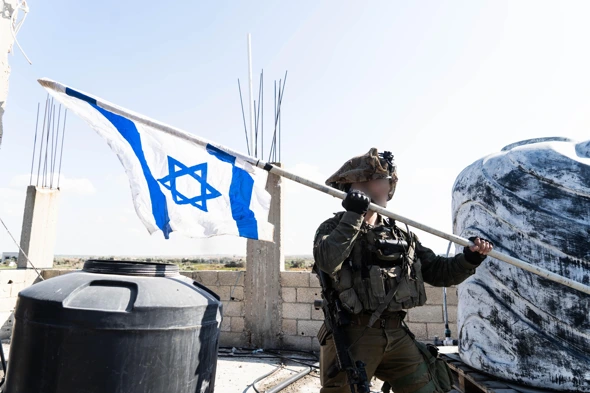
No Israeli leader invoked the Sabra in rallying the nation. No propaganda campaign resurrected the term. Yet the qualities it represents—toughness, strong roots, survival in harsh conditions, and patient endurance—have become the defining characteristics of Israeli society’s response to its longest war. The inner sweetness of its fruit has been both a source of revived solidarity and a vulnerability, allowing manipulation by an enemy that fights with medieval cruelty, taking hostages—the soft spot of the country’s family-oriented culture.
October 7 in historical time and space
For the Jewish people, historical time has long been marked by cycles of presence in the Land of Israel and exile, during which they often faced persecution. The establishment of the Jewish state in 1948 marked a return to their ancestral homeland and was regarded as a refuge from centuries of violence—from pogroms to the Holocaust. Although subsequent wars and terror attacks followed, for Israelis and Jews worldwide, the sense of collective helplessness seemed relegated to the past. October 7 shattered this sense of security, provoking a profound sense of trauma and betrayal. By November 2023, 253,000 Israelis from northern and southern communities had become internal refugees,[16] their flight shrinking the very land they had returned to as a sanctuary after the exile—suddenly smaller, more vulnerable, and painfully isolated.
The Muslim calendar begins in 622 with Muhammad’s Hijra (migration) from Mecca to Medina, where he consolidated power by exiling the prosperous Jewish tribes who formed the majority and seizing their wealth. During that eviction, 600 to 900 men of one Jewish tribe were beheaded in a single night, and their wives and children sold into slavery— another tragedy in the long history of Jewish exile.[17] The remnants of those tribes fled to the Oasis of Khaybar, only to be pursued by Muhammad and his troops.
The raid (ghazwa) on Khaybar in 628, described with cruelty in early Islamic sources, was remembered as the fate awaiting those who reject the faith. For Gilles Kepel, France’s preeminent scholar of Islam and geopolitics, the transport of hostages on motorcycles to Gaza’s tunnels echoed the way prisoners were carried on camels from Khaybar, making October 7 a modern reenactment of that infamous ghazwa.[18] Even after the ceasefire in Gaza and the thwarting of the jihadist dream of destroying the Jewish State, Gazan youth continue to chant, “Khaybar, ya Yahud, jish Muhammad sa Ya’ud!” (Khaybar, Khaybar, o Jews! The army of Muhammad will return!).[19] —in a demonstration of sabr (patience), a reminder that the end of fighting does not mean the end of the struggle.
October 7 in geopolitical time and space
The Palestinians may have lost the war on the ground, but they won the global narrative. Going beyond the symbolism of the cactus to affirm their connection to the land, they succeeded in reorienting both the geopolitical and moral compass of the world. According to Kepel, the Hamas attack of October 7 was as consequential an international event as the fall of the Berlin Wall, marking a profound rupture in the post–Cold War order.[20]
In its aftermath, Hamas and its supporters managed to reset the focus of international politics—from the liberal, democratic North, whose institutions had long defined the postwar consensus, toward the more autocratic and illiberal Global South.[21]
Kepel, who is not Jewish, argues that the Holocaust and its consequences provided the moral and institutional foundations of the post–World War II order.[22] In the wake of October 7, states such as South Africa, together with international NGOs and media sympathetic to the Palestinian cause, recast Israel as a white colonial power aligned with the North and accused it of perpetrating genocide against impoverished and dispossessed Palestinians identified with the Global South. The resulting indictment of Israel for colonial and racial crimes thus amounted, in Kepel’s view, to a broader rejection of the postwar order—and, by extension, to a symbolic denial of the Holocaust itself, substituting colonialism and slavery as the ultimate moral crimes of the modern world.[23]
The consequences of October 7 are more far-reaching than those of 9/11, Kepel contends, “because 9/11 did not fracture the West,” whereas Hamas’s assault “introduced a sort of wedge inside Western societies, pitching one against the other—the exponents of the Global South against the people who pay attention to the suffering of the Jews.”[24] France, Britain, and other European governments have sided with the former by recognizing a Palestinian state.
The Jihad of October 7 began with the sword, but the struggle continues by other means. Jihad by the tongue—in Arabic, jihad bil-lisan—refers to protecting and spreading Islam and through words.[25] It is too early to tell how Israel’s impressive success in repelling attacks on seven fronts will shape the wider debate, but for now, the Islamists have waged an effective global campaign of words, leaving Israel on the defensive.
Jewish Patience (Savlanut) in Time and Space
On the eve of Jerusalem Day in June 2024, Master Sergeant Oded Harush, an Israeli reservist on brief leave from the Gaza front to see his wife and children, appeared on Channel 14 to complain, to praise, and to plead.[26]
He complained about the Israeli mainstream media’s coverage of the war:
“The gap between what’s happening and what’s reported is driving me crazy. Every time I come out of Gaza—Jabalia, Khan Yunis, Rafah—the disconnect breaks me. We’re not getting the recognition we deserve; our successes aren’t being shared.”
He praised the courage of his comrades:
“We fight in impossibly complex terrain, above and below ground—discovering new tunnels, stopping terrorists, dismantling their infrastructure.”
Finally, he pleaded for patience. Harush said that in every Gazan home he entered, he saw images of the Al-Aqsa Mosque and Temple Mount—symbols of steadfastness and Jihad.
“I wish we had this kind of clarity in our path,” he lamented. “When you have clarity, you have patience. Without patience, there is no clarity.”
Harush spoke at a moment of maximum pressure—President Biden was urging a ceasefire, international condemnation was intensifying, and the campaign appeared indefinite. Yet by year’s end, after the systematic dismantling of Hezbollah, the disabling of Iran’s air defenses, and the collapse of the Assad regime, it was clear to outside observers: Israel had revealed a society rooted in resilience, innovation, and civic commitment. Historian Stephen Kotkin called Israel’s performance “breathtaking”—“they fight as a whole society, not just as a separate one percent military.”[27]
Now Israel, as a society, needs to seek clarity. Two hard years of war against an adversary for whom sabr—patience—is an existential virtue have revealed that the Sabra ethos was not lost, only dormant. Like the Sabra cactus, Israelis have shown themselves tough on the outside but tender within. That tenderness is evident in the care extended to hostages, the fallen, and the wounded and their families—a spirit that must be preserved. What should not be is the media-curated activism that projects weakness and emboldens the enemy.
One symptom of that defeatism was the remark by former IDF spokesperson Daniel Hagari, who said:
“Hamas is an idea… It’s rooted in the hearts of the people. Anyone who thinks we can eliminate Hamas is wrong.”[28]
The Jewish people’s attachment to the Land of Israel rests on ideas far older and deeper than Hamas or any other claimant—ideas that bequeathed to humanity the ethical vision of the Bible and the Prophets. The campaign to delegitimize and destroy the Jewish state will continue by every means: terror, diplomacy, lawfare, and the shaping of the global narrative. Israel’s enemies have plenty of patience—but so does Israel. Quietly, without proclamation, the Sabra is back.
Mr. Kenin is an independent writer, researcher and translator living in Jerusalem.
This essay is part of the collection: Two Years Since October 7: Disillusionment, Change and Struggle
[1] Opuntia ficus-indica (prickly pear), https://www.cabidigitallibrary.org/doi/abs/10.1079/cabicompendium.37714
[2] Not All Quiet on the Culinary Front: The Battle Over Borshch in Ukraine, https://journals.ku.edu/folklorica/article/view/18334
[3] Nasser Abufarha, Land of Symbols: Cactus, Poppies, Orange and Olive Trees in Palestine, Identities: Global Studies in Culture and Power, 15 (2008): 343–368, https://doi.org/10.1080/10702890802073274; “Patience” as Resistance, https://averyreview.com/issues/69/patience-as-resistance
[4] “And We will surely test you with something of fear and hunger” (2:155), surah Baqarah aya 155 , English translation of the meaning Ayah, https://surahquran.com/english-aya-155-sora-2.html?
[5] “And do not say about those who are killed in the way” (2:154), surah Baqarah aya 154 , English translation of the meaning Ayah, https://surahquran.com/english-aya-154-sora-2.html
[6] “Hamas Thinks They’re Winning!” Mordechai Kedar Goes Off on Israel Hamas War & Jihad, https://www.youtube.com/watch?v=n0ZcFZxV2zQ
[7] Hamas TV to Israelis: We “love death more than you love life”, https://www.youtube.com/watch?v=PAOzy2zwyxo
[8] The Myth of the Israeli Sabra, https://www.jewishpost.com/archives/news/the-myth-of-the-israeli-sabra.html
[9] Negotiating the Uniform: Youth Attitudes towards Military Service in Israel, https://journals.sagepub.com/doi/pdf/10.1177/1103308818787647 ; Aspects of the Formation of Israel’s National Security Doctrine,https://www.idf.il/media/jerbuj2c/israel-s-national-security-doctrine-oct-2024.pdf
[10] Israeli entrepreneurs in talks over tech exodus, https://en.globes.co.il/en/article-israeli-entrepreneurs-in-talks-over-tech-exodus-1001442106
[11] Kedar, “Hamas Thinks They’re Winning!”
[12] The first tank to enter Gaza at the beginning of the war was manned by a Haredi from the Ultra-Orthodox neighborhood of Mea Shearim, a national-religious soldier, and two secular Israelis. Kan 11 TV report, https://www.kan.org.il/
[13] Israel’s reservists drop everything and rush home, https://www.reuters.com/world/middle-east/israels-reservists-drop-everything-rush-home-following-hamas-bloodshed-2023-10-12/
[14] ‘Call of the hour’: IDF reservists keep morale high as thousands answer call-up for Gaza offensive, https://www.ynetnews.com/article/hyrorbe5lx
[15] Kedar, “Hamas Thinks They’re Winning!”
[16] The Evacuation of Israeli Communities During the Swords of Iron War: Plans, Execution, and Reassessing the Criteria for Evacuation, https://www.inss.org.il/publication/evacuation/
[17] The Jews of Arab Lands: A History and Source Book, Norman Stillman, The Jewish Publication Society, 1979, pp. 9–19.
[18] Gilles Kepel, interview by L’Echo, “Gilles Kepel: ‘L’attaque du 7 octobre fracture l’Occident,’” https://www.lecho.be/dossiers/guerre-israel-hamas/gilles-kepel-l-attaque-du-7-octobre-fracture-l-occident/10543910.html
[19] #gaza #israel ##viral Gazans Chant “Khaybar” During Ceasefire, https://www.youtube.com/watch?v=ZVlwlwiNCrk
[20] Gilles Kepel, interview by Alain Elkann, “Gilles Kepel,” Alain Elkann Interviews, https://www.alainelkanninterviews.com/gilles-kepel-2/
[21] “Gilles Kepel: ‘L’attaque du 7 octobre fracture l’Occident,’” L’Echo
[22] Gilles Kepel, interview by Librairie Mollat on Holocaustes: Israël, Gaza et la guerre contre l’Occident (Paris: Gallimard, 2024), YouTube, https://www.youtube.com/watch?v=kXzilSNDw-8
[23] These ideas are not new, but October 7 brought them to a much wider audience. Kepel traces the association between the Palestinian cause and the concept of “woke”—a term originating in African American activism of the 1960s. From the start, this linkage allowed proponents to prioritize their interpretation of Palestinian issues over the history of Israel, a story of white people whose details they may neither fully know nor wish to acknowledge, since it does not fit their narrative.
[24] Gilles Kepel, interview by Armin Rosen, “An Optimist Who Won’t Be Fooled,” Tablet, https://www.tabletmag.com/sections/arts-letters/articles/kepel-optimist-who-wont-be-fooled
[25] The True Meaning of Jihad, https://www.justislam.co.uk/the-true-meaning-jihad-p-2.html
[26] Oded Harush, interview, “The Fighter’s Message to the Media: They Heard the Sound of the Tracks and Fled — That’s the Enemy” (הלוחם במסר לערוצי התקשורת הם שמעו את רעש הזחלים וברחו זה האויב), YouTube, June 5, 2024, https://www.youtube.com/watch?v=0Y-NYQ7PQuY
[27] Stephen Kotkin, interview by Peter Robinson, “Five Questions for Stephen Kotkin: Advice for the New Administration (and the Rest of Us),” Uncommon Knowledge, January 28, 2025, https://www.iheart.com/podcast/256-uncommon-knowledge-31094028/episode/five-questions-for-stephen-kotkin-advice-262195364/
[28] IDF spokesman says Hamas can’t be destroyed, drawing retort from PM: ‘That’s war’s goal’, https://www.timesofisrael.com/idf-spokesman-says-hamas-cant-be-eliminated-will-remain-in-gaza-if-no-alternative/