By: Alon Shalev
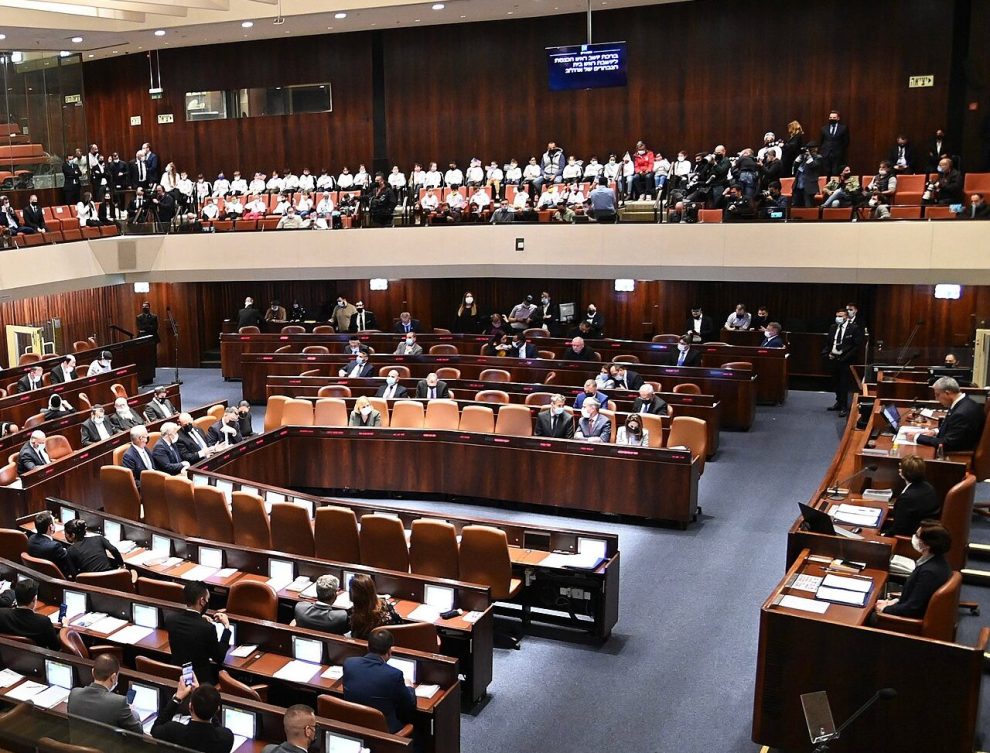
“…Eighty percent of the Israeli public agrees on eighty percent of the issues. We still have twenty percent disagreement, on things like Judea and Samaria, but today nothing gets done even on the things we all agree on”. These words, spoken in 2012 by Naftali Bennett upon his entry into Israeli politics[1], became the founding principle of the thirty-sixth government he formed together with Yair Lapid in 2021, and was further explicitly stated during its swearing-in by Benny Gantz, one of its senior partners: “Since entering politics, I have repeatedly said that eighty percent of Israeli citizens agree on eighty percent of the issues, and today we have an opportunity to promote the things we all agree on”.[2]
The 80-80 coalition collapsed fairly quickly, and not without reason. That twenty percent may be small in terms of volume, but it represents approximately 99% in essential weight. Within it are the existential problems facing the State of Israel, primarily comprised of two issues: the first is “the conflict”, or in better phrasing, the war between Israel and the Palestinians, of which the War of Redemption (Swords of Iron) is the most difficult campaign in its history; and the second is the State of Israel’s identity, with the question of the state’s constitution being only the tip of the iceberg. The remaining eighty percent involves its potential for prosperity. The guiding principle of the “Change” government, as it was called, was in effect the following: if at any rate there is no progress on the twenty percent issues – and none on the foreseeable horizon – and we have also seen that it is possible in the meantime to manage fairly well without resolving them, we should set the existential problems aside and focus on prosperity.
There is much truth in the Bennet-Gantz claim. For decades, Israeli governments have abandoned the eighty percent regarding prosperity to backroom deal-makers, pressure groups and sectarian groups, thus creating the paradoxical situation where the majority of government policy does not match the preferences of the majority of the Israeli public. However, contrary to the implicit message of the 80-80 slogan, the neglect of Israeli prosperity is not due to an over- involvement with the twenty percent. To the contrary – Israel’s strategy for handling existential issues, from the time of its establishment to today, has been to refrain from handling them, to procrastinate and avoid. All efforts undertaken in the twenty percent realm have been defensive, moves made against the impending disaster should “the other side” obtain the power to determine the issues. The eighty percent has been sacrificed for preserving the status quo of not deciding the twenty percent. Budgets, appointments, regulation and infrastructure – all these have become currency in a politics of immobilization.
Over the past three years, both existential issues have blown up in our faces, first with the dispute surrounding the balance of powers in Israel, followed by – and not entirely unrelated to – the October 7 massacre. The illusion that it is possible to freeze existential problems in amber has dissipated in rage and blood, and woe to us if we allow ourselves, as it seems some of us are already inclined to do, to labor under it once more. The next detonations are on their way, and there is no guarantee that we will survive them. Without addressing the existential issues, we are slowly but surely drifting towards our destruction. I might add that we will not be able to prosper either. But that is not the all of it: as is the nature of neglect, it has the power to cause non-cardinal issues to intensify into existential threats over the long term. Exactly that happened with the issue of internal security, as it too blew up in our faces during the riots of May 2021, and such is the nature of the issue of the Haredi (ultra-Orthodox) sector’s integration into society, which in its current form poses an existential threat to the economic future of Israel – with all that that implies.[3]
The majority of Israeli citizens instinctively understand this simple matter. That is the source of the common discourse abounding these days regarding the desire for a “Zionist” or “service” coalition, or any other phrase seeking to symbolize something that approaches a mainstream Israeli faction. The common rationale for such a coalition is passing the draft law. However, without a vision unifying the two existential core issues, such a coalition – if it can even form in the first place – will rapidly fall apart. Moreover, even if manages to last its term, any change it succeeds in promoting on eighty percent matters, including the draft, will be overturned as soon as Israeli citizens and their representatives are once more tempted to win avoidant power at the price of surrendering to sectors and deal brokers. More importantly, creating a coalition broad enough “to deal with the Haredi issue”, although it is undoubtedly a crucial one, is actually more of the same: setting an alternative goal at the expense of taking on the issues that the very fate of the nation rests upon.
No more.
In the following section, I will propose some directions for thinking about the two core issues that can, in my view, crystallize a vision around which 65%-70% of Israeli society might converge on and commit to: a 70-20 coalition. Such a vision could ensure a golden age of broad coalitions and governments, under which we will once again take our fate into our own hands, march toward destinations we seek to reach instead of drift uncontrollably toward destinations to which external players and internal radical forces are leading us, and also increase Israeli prosperity along the way.
A Vision for Ending the Israeli-Palestinian War: Palestinian Emirates
The vision for ending the conflict between Israel and the Palestinians must be one that most of the Israeli public would find acceptable but also enough of the geopolitical actors Israel has no choice but to take into consideration. Such a vision must meet two conditions that are simultaneously moral and practical: (1) Citizenship: anyone residing in the area between the Jordan and the sea must be granted citizenship status; meaning that at the end of the process, all Palestinians would be citizens under some arrangement;
(2) Peace: the solution must ensure the existence and security of Israel and its citizens; meaning, it must be one that ends the war between Israel and the Palestinians, rather than simply exchanging a war between a state and an occupied nation with a war of another sort that would endanger Israel’s existence even more.
The citizenship condition can be met by one of three ways. One theoretical solution is the transfer of the citizenship-less population to another area. This is the voluntary emigration fantasy. Now, at the close of the Swords of Iron battle, what should have been clear to all from the outset was made manifest – it is not feasible. Even should there be an exodus of Palestinians, even on a mass scale, it will not reach large enough proportions to solve the issue on its own.
That leaves us with the two familiar options. The first is the “one state” solution over the entire territory and granting citizenship to the Palestinian population. This solution fails to meet the peace condition, since it will simply transform the Israeli-Palestinian war into an inevitable civil war. Only one solution then remains: an unthreatening Palestinian autonomy. The vision of a two-state solution, which is today, the only solution non-Israelis are willing to consider, seeks to be such a solution. Supporters of the two state solution believe that certain arrangements – such as demilitarizing the Palestinian state, maintaining Israeli freedom of military action throughout the entire territory, and creating economic dependency – would render a Palestinian state in the territories of Judea, Samaria, and Gaza non-threatening. This is no less a fantasy than the fantasy of voluntary emigration. The likelihood that such a Palestinian state would remain demilitarized, stable, and non-hostile is far too low for Israel to be able to afford to gamble on it, and this solution has rightly been rejected by an overwhelming majority of Israel’s citizens.
We need, then, a different model of non-threatening Palestinian sovereignty. The idea of Palestinian emirates, conceived by Dr. Mordechai Kedar[4] (though not necessarily in the specific form he proposed) could be the agreed-upon vision of the central pillar of Israeli society. The Palestinian emirates concept proposes the establishment of several independent Palestinian political entities, whether urban or regional: the Emirate of Hebron, the Emirate of Ramallah, the Emirate of Jenin, and so forth. Such a division on the one hand fulfills the condition of citizenship – providing a recognized political framework for each Palestinian community – and on the other hand, meets the condition of peace, that is, preventing the formation of a single hostile entity possessing unified political and military power. Like the unified Palestinian state model, the emirates model has a number of problems that must be overcome in order to meet the conditions of peace, but the prospect of overcoming them is incomparably greater if we set the emirates solution as the vision for ending the war, and strive to create the conditions that would make it feasible.
If so, the emirates solution meets the citizenship condition, and in contrast to the two state solution, has the potential to meet the peace one. This is a vision that 65%-70% of Israeli citizens can agree on and demand from the governments formed in the next few decades.
The Path to Determining the State of Israel’s Identity: An Israeli Constitution of “Commandments”
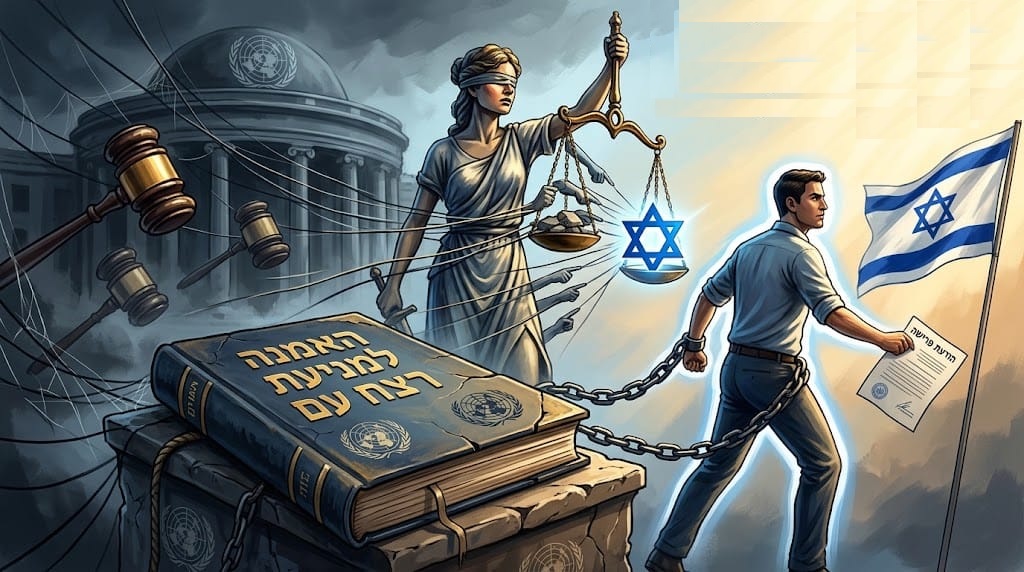
The dispute surrounding the balance of powers / a constitution for Israel presents itself as a disagreement over what constitutional, practical (in terms of preventing the abuse of governmental power), and fair arrangements are appropriate from a liberal-democratic standpoint for the State of Israel. It is constrained to present itself as such, for within the framework of liberal-democratic logic, it is legitimate to think about and formulate a constitution only along such lines. This is the Rawlsian idea of the “veil of ignorance”: arrangements should take shape solely out of considerations of fairness, and never by taking into account particular identities, visions, or interests.
There have been and still are among us those who genuinely and sincerely act – or attempt to act – from the Rawlsian position. Until quite recently, I myself was faithful to this principle of neutrality. However, it must in fairness be admitted that alongside them were those whose position on the question of an Israeli constitution stemmed from motives of power, ideology, and interests: they wished to maximize the power of forces they had reason to believe were more conducive to their aims. But what drove the majority of the Israeli public was fear: the fear that within whatever rules took shape, as fair and as practical as they might be, whoever held the upper hand would mold Israel in such a way that it would become a place they could not bear to identify with or live in (including in the context of a resolution to “the conflict”). I recall a discussion that took place during the days of the dispute over the balance of powers, in a group dominated by judicial reform supporters. At a certain point, amid the usual assertions about the sovereignty of the people through parliament, the question arose of how the group’s members would have acted had a parliamentary majority emerged in Israel that decided to annul Israel’s definition as a Jewish state, with all that would imply. The answer was nearly unanimous: we would have acted like the “Kaplan” protesters. The tip of the iceberg showed the fear of a distorted arrangement that would allow one force or another to impose its will on others, but what was truly stirring beneath the surface was a fear of what might be made possible within a proper arrangement, if enough people willed it to be so.
Our current framework blocks us from dealing with the question of Israel’s identity; we must therefore seek a solution elsewhere. I propose abandoning the Rawlsian principle and consciously and deliberately designing a constitution that is not neutral but particularist – a constitution tailored to Israeli dreams, but more centrally, to their nightmares. In fact, that is already the reality on the ground. Defining Israel as a Jewish state is already a departure from the neutrality that the prevailing constitutional logic supposedly imposes on us.
A particularist constitution would include a series of clearly defined, concrete “commandments”. Just as in Moses’ tablets, they will include dos and don’ts, positive and negative commandments. In practice, we already have a series of positive commandments expressed in the Declaration of Independence – such as “THE STATE OF ISRAEL will be open for Jewish immigration and for the Ingathering of the Exiles; it will foster the development of the country for the benefit of all its inhabitants; it will be based on freedom, justice and peace as envisaged by the prophets of Israel; it will ensure complete equality of social and political rights to all its inhabitants irrespective of religion, race or sex…”.[5]
Alongside these will be negative commandments. Contrary to the positive ones, that include abstract values such as “democracy” “freedom” or “equality”, which are declarative and very open to interpretation and disagreement over proper implementation, the negative commandments will be as concrete as possible. They will constitute a series of scenarios that would be prohibited in the state of Israel under any circumstances. In other words, they will circumscribe the way all branches of government – legislative, executive and judicial – may interpret the positive commandments and determine accordingly what they may do and the others cannot. Such commandments may include for instance: Israel will not enact any laws which constitute the coercion of religious practices on its citizens in either public or private spheres; Israel will not prevent the existence of traditional Jewish practices in either public or private spheres, including those that require gendered separation; Israel will not prohibit protest or pride marches in public spaces; Israel will not coerce citizens to study content contrary their religious beliefs. These are simply examples (and not necessarily my preferences). The goal will be to formulate an agreed-upon list that can allay the fears of the vast majority of the Israeli citizenry – on the order of magnitude of 70%.
Needless to say, this process will jeopardize groups explicitly outside the Israeli mainstream. However, this danger can be minimized if these minority groups choose to enter the process and influence it, in exchange for strengthening the broad consensus around the constitution, and if subgroups within the mainstream hold sufficient empathy toward these minority groups to act on their behalf vis-à-vis the mainstream as a whole. In plain terms, I assume that at the current historical moment there is a sufficient mass within the mainstream that will not agree to excessive mistreatment of the Haredim, as well another mass that will not agree to excessive mistreatment of Arabs, and in general, an overwhelming mass of people sufficiently faithful to the basic values of liberty and equality to refuse to condone a constitution that would serve them at the cost of mistreating others.
For such a vision to be effective, the particularist constitution must be established together with the application of rigid standards for the scope of judicial constitutional review. The lack of such standards is one of the primary causes of the current struggle over checks and balances, since it would allow the judiciary, in practice, to amend the constitution ad infinitum, without changing a word of it, thus rendering the attempt to formulate an agreed-upon constitution meaningless. The negative commandments would void the justification for such interpretive freedom as well as make it superfluous to its supporters today, aside from those who are not interested in staving off their nightmares but only in the power to achieve their dreams unconstrained.
We must initiate the process of formulating a particularist constitution as soon as possible. Our lives depend on it, and we cannot afford to put it off any longer.
***
Without a vision for dealing with Israel’s existential issues that would be acceptable to the Israeli mainstream, we are doomed in the long term (and perhaps medium term) to annihilation, while in the short term, dreams of breaking up the large voting blocs and creating a broad coalition that represents such a mainstream have no prospect (or use). Whether along the lines of what I proposed here or others, we must dedicate all our efforts towards such a vision and marshal all our strength to forge it.
Time is pressing. Elections are on the horizon within a year. It is possible that through intensive effort it will be possible to build an initial vision and win supporters for it among parties across the spectrum of the Israeli mainstream. But there may be a more modest goal that can more readily be achieved: to forge a spectrum of parties that commit to the voters they will form a government that would initiate a people’s assembly project, the purpose of which would be to draft a vision for the two existential questions. People’s assemblies are a broad participatory process in which a representative sample of citizens, chosen by lottery, studies the existential issues, hears experts and holds debates, then formulates written recommendations within a fixed timeframe and submits them to the government. This is an advisory, transparent, and time-limited process that does not replace the authorities but obliges them to respond publicly.[6] Tell the next election’s candidates: you will not receive my vote if you do not commit to the project of composing the Israeli 70-20 vision. If we act thus, hope is not yet lost.
Dr. Shalev is a researcher at the Jonathan Sacks Institute of Bar Ilan University and a Research Fellow and faculty member at Shalom Hartman Institute.
This essay is part of the collection: Two Years Since October 7: Disillusionment, Change and Struggle
[1] Asher Schechter “Naftali Bennet: Forget the Settlements – Let’s Talk Centralization” [Hebrew] TheMarker, 28.7.2012 https://did.li/k1XZH.
[2] Transcript of meeting no. 28 of the 24th Knesset plenum, 181 (June 13, 2021).
[3] Yehudah Yifrah “The Alliance with the Ultra-Orthodox has Become an Existential National Threat” [Hebrew] Makor Rishon 24.10.2022 https://did.li/86GOf
[4] Mordechai Kedar “The Palestinian Emirates Plan is the Only Path to Peace” YouTube, 5.5.2022 https://www.youtube.com/watch?v=y3VMfABGtro (see also https://www.youtube.com/watch?v=hBTPAFmRhdE )
[5] Israel’s Declaration of Independence https://main.knesset.gov.il/en/about/pages/declaration.aspx
[6] Rivki Dabash, “Peoples’ Assemblies for Constitutional Issues” [Hebrew] Hashiloach quarterly journal 22 53 (2020).