Shiloh Policy Forum and Kohelet Policy Forum submitted their review, authored by Dr. Anat Roth and Adv. Avraham Russell Shalev, ahead of a hearing on the matter held by the Knesset Foreign Affairs and Defense Committee, 9.7.2026.
Summary:
The Oslo Accords, comprised of three agreements (Oslo I, the Cairo Agreement and Oslo II) detail the arrangements put in place for an interim period preceding the signing of a permanent agreement. At the core of the Accords was PLO recognition of the State of Israel, within the Green Line, as a Jewish state, an Israeli recognition of the Palestinian people, and a mutual commitment to cease hostilities. From the outset, this core was negated by Arafat and senior PLO members in word, with statements like “Opponents of the agreement can carry on armed resistance” made by chief of Preventive Security Jibril Rajoub, or “The intifada will continue” by Foreign Minister Farouk Qaddumi. Although Israeli politicians minimized such rhetoric at the time, they were followed in short order by action, with fundamental violations of the agreements that continue to this day.
Major Palestinian Violations:
- Unilateral Declaration of a Palestinian State: Article XXXI of Oslo II states: “Neither side shall initiate or take any step that will change the status of the West Bank and the Gaza Strip pending the outcome of the permanent status negotiations”. The Palestinians violated this provision within the five year interim period and even more so later on, from Arafat declaring his intention in November 1998 in a Nablus rally to declare a Palestinian state with Jerusalem as its capital; to unilaterally changing the PA’s status in the UN; and to recently obtaining recognition as a state in the aftermath of October 7 from countries like Spain and the UK.
- Establishing Diplomatic Relations: Article IX (5) of Oslo II states that the Palestinian Council shall have no “powers and responsibilities in the sphere of foreign relations” including establishing or permitting embassies or appointing or accepting diplomats. In practice, the PLO and PA maintain a wide diplomatic network far beyond what was permitted under the Oslo agreements, maintaining 80 embassies and representatives around the world, and taking an active part in international procedures, primarily in the ICC, after obtaining the status of a non-member observer state from the UN.
- Illegal Construction of Housing and Roads, and Agricultural Takeover of Area C Territory: Article XI and XVII of Oslo II and Annex III stipulate that Area C is subject to full Israeli construction and planning jurisdiction. Despite this, since 2009 the PA is engaged in a massive project to take over the territory, by illegal construction accompanied by civilian population transfers from Areas A and B; by agricultural take over through legal claims of lands cultivated by squatters, sheep grazing and the construction of water installations; by breaking ground for and paving new roads; by carrying out land settlement procedures; by legal campaigns against the demolition of illegal structures; and by the establishment of illegal quarries.
- The Scope of the Palestinian Police and Their Weaponry: Article IV of Oslo II states that the Palestinian Police Force will be limited to 30,000 total armed personnel, with a set amount of a small variety of weapons. In practice, the PA explicitly violated this commitment already by the late 1990s, establishing, under various organizations, an army of tens of thousands, as well as smuggling in enormous quantities of ammunition that likewise far exceeded what was permitted under the agreement, including light anti-tank weapons and anti-tank grenades. They also began digging anti-tank tunnels and sinkholes beneath major roads in Judea, Samaria, and Gaza, in order to fill them with explosives, reportedly stolen from quarries inside Israel. The PA began developing small production workshops for manufacturing hand grenades and other ammunition. This armament buildup continued unabated under Arafat’s successor Mahmoud Abbas. According to an August 2023 study by the Geneva Centre for Security Sector Governance (DCAF), the PA employs 34,391 people in its security sector in Judea and Samaria alone, nearly three times the Oslo limit; and possess unsanctioned anti-tank weapons and armored vehicles.
- Multiplicity of Armed Organizations: Article XIV of Oslo II states that aside from the official PA Police, “no other armed forces shall be established or operate in the West Bank and the Gaza Strip”. In blatant disregard for this provision, the PA and Fatah established security apparatuses immediately following the Cairo Agreement. Aside from the civil police established to maintain law and order, the PA established: the Preventive Security, headed by Muhammad Dahlan and Jibril Rajoub; the Palestinian National Security Forces, evolved from the PLO and including units organized for military combat and not merely urban policing; Force 17, Arafat’s presidential guard unit; General Intelligence headed by Majid Faraj; The Military Intelligence, a smaller intelligence body whose main function was the arrest and interrogation of opposition activists; and armed factions of Fatah field operatives, infamous among them the Tanzim headed by Marwan Barghouti and the Al-Aqsa Martyrs’ Brigades. Seized documents show that quite a few fighters from these “popular” organizations officially received their salaries from the PA as members of the security forces. As was made clear by Palestinian leaders to their followers, the Oslo Accords were meant to be a Trojan Horse (as Jerusalem Minister Faisal Husseini termed it) to introduce armed forces into Israeli territory. Indeed, terror attacks against Israel never ceased, with PA forces first hiding behind “rogue elements” and then explicitly participating. The Tanzim and Al-Aqsa Martyrs’ Brigades claimed responsibility for more than 300 terror attacks that killed Israeli civilians, and carried out more than 1,500 attacks and attempted attacks since September 2000.
- Support, Encouragement, Direction and Funding of Terrorism: Article XV of Oslo II stipulates that “[b]oth sides shall take all measures necessary in order to prevent acts of terrorism, crime and hostilities directed against each other.. and shall take legal measures against offenders”. The 1998 Wye Agreement expanded on these obligations, and Arafat gave written personal assurances; however, the PA never actually turned its back on terrorism: (A) The Palestinian police, established by virtue of the Oslo Accords, was intended from the outset to serve as an organized armed force that would continue the “struggle” against Israel from within. PA police officers first turned their weapons against IDF soldiers in 1996, during the Western Wall Tunnel events which saw 17 Israelis killed, and extensive documentation demonstrates how Palestinian police personnel act, in effect, as “policemen by day and terrorists by night”. During the second intifada, on September 29, 2000, an Israeli Border Police officer was shot dead by his Palestinian police partner on a joint patrol. This incident struck at the heart of the security coordination mechanism, as the framework meant to build trust and prevent terrorism became the scene of a lethal attack on an Israeli security officer. Another notorious incident was the Ramallah lynching two weeks later, when two Israeli reservists who had mistakenly entered Ramallah were detained by Palestinian police, brought to the local police station, and left unprotected from a Palestinian mob that eventually murdered them brutally. A February 2024 report by the Washington Free Beacon shows that 23 of the “30 martyrs” appearing in a 2023 Fatah poster were Palestinian security personnel killed while carrying out terror attacks against Israelis. The PA takes pride in the dual role played by its members, and boasts of the high number of “martyrs” and prisoners from the ranks of its security apparatuses. (B) The “Pay for Slay” scheme awards monthly payments to Palestinian prisoners in Israeli jails and the families of “martyrs”, with the payment amount dependent on the length of the prison sentence – such that a more serious and lethal attack entitles the perpetrator to a higher monthly payment. The total payments amount to $200–300 million per year, roughly 3–6 percent of the PA’s total budget. (C) Terrorists are commemorated in the names of streets, junctions, public institutions and public sporting events. For example, Palestinian Media Watch documented more than a dozen institutions in Judea and Samaria in 2010 bearing the name of Dalal al-Mughrabi, leader of the 1978 Coastal Road massacre in which 35 Israelis were murdered, among them 9 children. (D) “Martyrs” are glorified in the PA’s official media and children’s television programs, such as the official newspaper Al-Hayat al-Jadida crowning Abdallah Barghouti, responsible for the murder of 66 Israelis between 2001-2002, as “our heroic prisoner”.
- Incitement and Teaching Hatred: Article XXII of Oslo II details the obligation to “foster mutual understanding and tolerance” and “take legal measures to prevent…incitement”. In sharp contrast, the Palestinian Authority cultivates a culture of hatred toward Israel, teaches jihad and terrorism, and creates, through every educational tool at its disposal, an ongoing ideological infrastructure for hostility and violence. Numerous studies and reports by international monitoring institutions reveal that the PA’s official textbooks for students are saturated with antisemitic content, glorification of terrorists, the erasure of the State of Israel from maps, a denial of its existence, and the promotion of self-sacrifice and “jihad” as supreme values. Palestinian children are taught from birth to hate Israel and fight it through terrorism. Such incitement is not confined to the curriculum but is also prevalent in extracurricular activities, end-of-year school performances, summer camps, and official PA media content broadcast to children. The international community, including the European Parliament, has repeatedly leveled sharp criticism at this phenomenon, and even conditioned part of their aid on educational reform, but in practice, terrorists continue to be elevated as role models for the younger generation.
- Destruction of Archeology, Heritage Sites, and Holy Places: Article IV Appendix 1 Article 2 of Oslo II stipulates the obligation to preserve and protect archeological sites. Recent research has revealed the systematic destruction of archaeology and Jewish heritage sites in Judea and Samaria, with 80% of the 365 most significant heritage sites in PA territories suffering damage. There is strong indication that the destruction can be traced back to the PA as part of a deliberate strategy to erase the Jewish historical connection to the land and seize it through illegal agricultural and construction initiatives. The PA also does not ensure access to holy sites as it should, going so far as to harm Jews who attempt to pray at Joseph’s Tomb without IDF protection.
Conclusion:
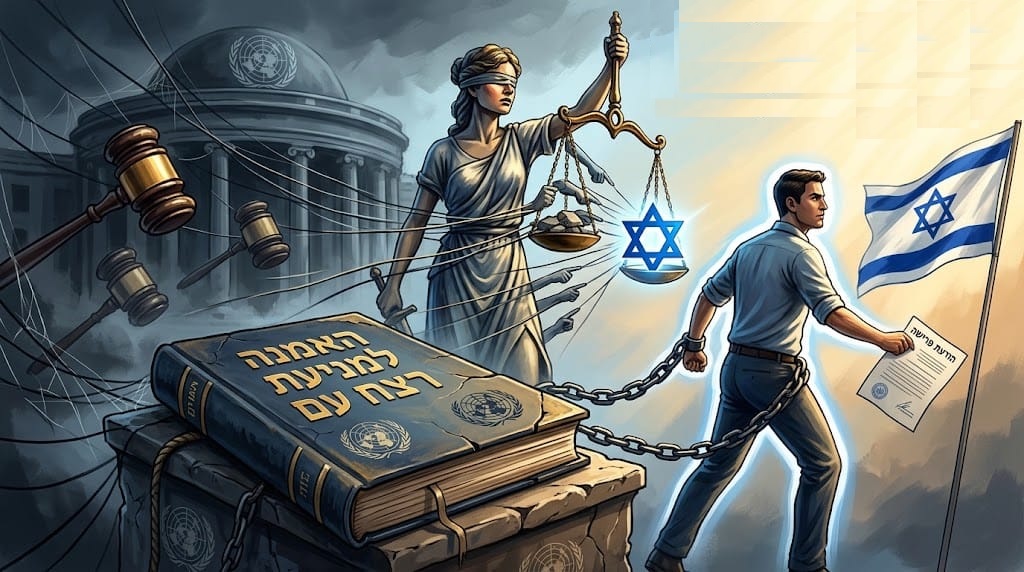
Palestinian violations of the agreement – which strike at the very heart of the Oslo Accords – constitute sufficient legal grounds for a formal Israeli declaration of annulment. Legally, such a move is justified, but the political, security, and economic implications must be considered. Such a declaration would lead to the immediate cancellation of the remaining provisions of the agreement still maintained and respected by the parties to one degree or another, such as the existence of the Palestinian Authority and its status as the representative governing body of the Palestinian public in Judea and Samaria; security coordination; and the Paris Protocol, which regulates the transfer of funds to the Palestinians. The State of Israel must consider whether such a move would serve its interests, or whether it is preferable to continue maintaining the framework of the agreements and operate within them.
It should be recalled that during Operation Defensive Shield (April 2002), the State of Israel, faced with the organized terror campaign led by Arafat, violated the Oslo Accords as well by restoring its security control over Area A, which had been transferred under the Cairo Agreement to the Palestinian Authority. This violation, made necessary by the transformation of Palestinian cities into terror bases and the severe harm to the security of Israeli citizens, effectively turned Area A into Area B, but passed without international protest, and continues in practice to this day.
The October 7, 2023 attack and the widespread support for the massacre among PA officials and the Palestinian public in Judea and Samaria require Israel to draw conclusions and take all actions necessary to prevent the recurrence of such a massacre in Judea and Samaria and along the Green Line, including steps that constitute a violation of the Oslo Accords.
For the full Hebrew memorandum