In the wake of yet another massacre of Jews celebrating Jewish holidays, it is evident that the constant demonization and vilification of Israel legitimizes and encourages the mass murder of Jews. Before their rampage on Bondi Beach, Australia, the father-and-son shooters made a video in which they swore allegiance to ISIS and denounced “the acts of Zionists.” Jihad al-Shamie, who murdered two Jews on Yom Kippur at a synagogue in Manchester, England, reportedly shouted: “This is what you get for killing our children.” Mohamed Sabry Soliman, who set fire to Jews at a hostage vigil in Boulder, Colo., screamed: “How many children you killed!”
The latest calumny against the Jewish state is that its defensive war against Hamas is, in fact, genocide—the “crime of crimes” under international law. The genocide libel originates in a small number of ideologically motivated and highly partisan academics, holding essentialist and hostile views of Israel, and relying on truncated and misinterpreted quotes of Israeli leaders.
These academics tout a supposed scholarly consensus on the “Israeli genocide” while deliberately ignoring any evidence to the contrary. Israeli historians Danny Orbach and Yagil Henkin meticulously dismantle allegations of genocide in a 300-page factual analysis. In September, more than 500 distinguished scholars in law, history, antisemitism, Holocaust and genocide signed an open letter rejecting the claims of genocide. Among these scholars are special prosecutors of Nazi and other war criminals.
A recent incident at the influential German journal, Analyse & Kritik, shows how the anti-Zionist echo chamber perpetuates itself in academia. In its latest issue, the journal featured an article by Abed Azzam, a professor at Bard College in Berlin, which asserted that Netanyahu’s invocation of Amalek in October 2023 demonstrates Israel’s genocidal intent. Azzam begins his article by declaring the “broad scholarly consensus” on Israeli genocide and then claims that Zionists historically identified Palestinians with Amalek, “the eternal enemy of Zionism.” His logic is circular: Israel’s genocide proves that the reference to Amalek was a call to genocide, while the invocation of Amalek shows Israel’s genocidal intent.
Jews, religious and secular alike, tend to reinterpret contemporary events in light of historical or biblical archetypes—enemies of Israel are constantly recast as the ancient foes of Pharaoh, Haman and Antiochus. A famous Israeli song by singer Meir Ariel, released during the 1990 Gulf War, stated: “We got through Pharaoh, we will get through this.”
For Israelis, the Hamas-led terrorist attacks in southern Israel became a world-shattering event for which they searched for parallels in Jewish history. The post-Oct. 7 season of the satirical Israeli show “The Jews are Coming” opened with clips of actors retelling their “testimonies” of historical massacres of Jews, such as the Destruction of the Temple in 70 C.E., the Crusades, the Kishinev pogrom, Kristallnacht, the 1941 Farhud in Iraq and Kfar Aza, drawing a direct line between them.
Already in Talmudic times, the sages taught that Amalek no longer existed as a literal nation. Over time, Amalek became the symbol of eternal hatred and enmity towards the Jewish people.
In his influential essay “Kol Dodi Dofek,” which discusses the religious significance of the creation of the State of Israel, Rabbi Joseph Dov Soloveitchik stated that any nation that seeks to destroy Israel is Amalek. From the 1930s onwards, Amalek became associated with antisemitism, the Nazis and the Holocaust. An Israeli listener would immediately understand that Israeli Prime Minister Netanyahu was situating the Oct. 7 massacre—the bloodiest day for Jews since the Holocaust —within the broader context of Jewish memory.
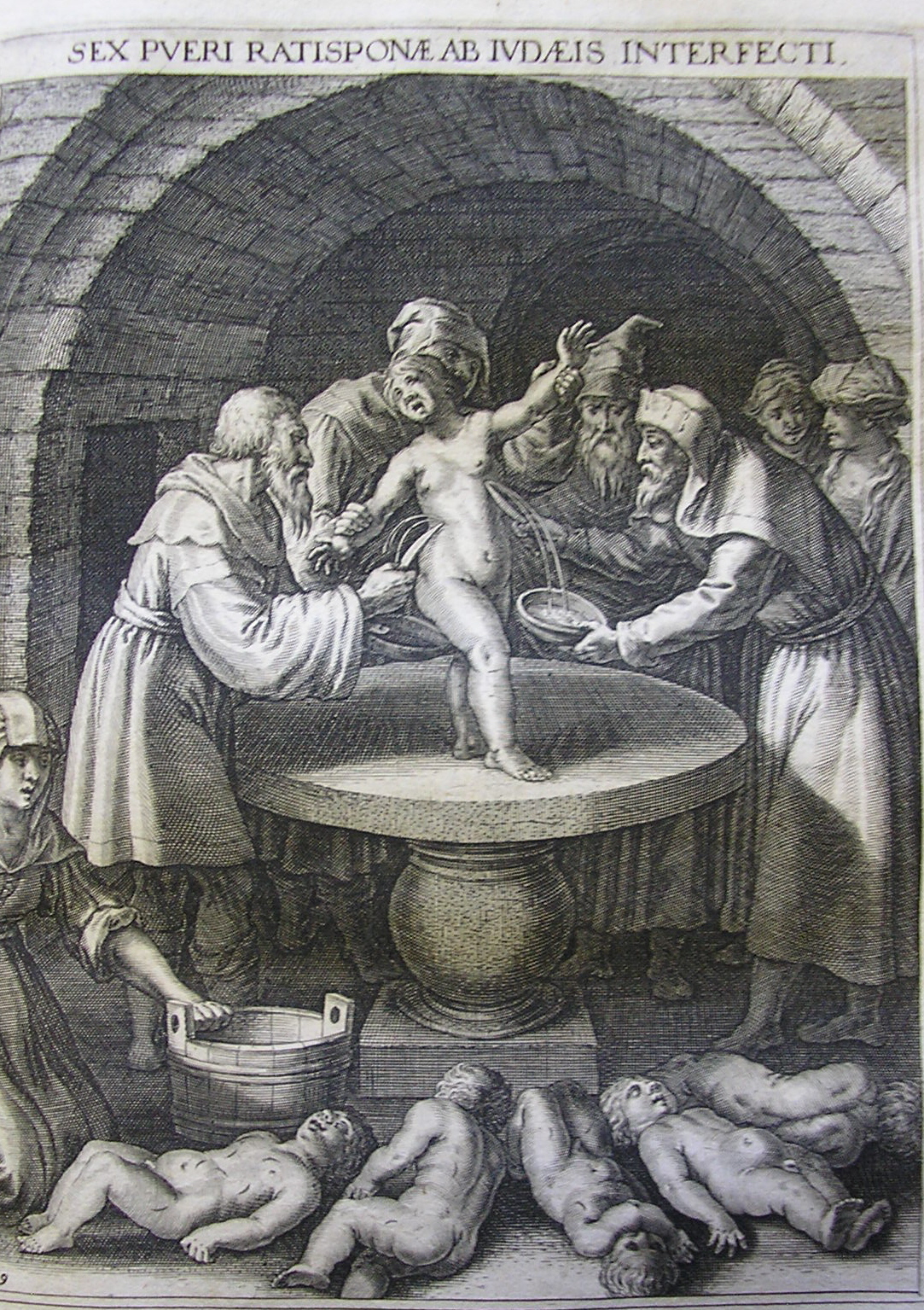
The weaponization of Jewish scripture to prove Jewish malfeasance is not a new phenomenon. Only recently, far-right conspiracist Candace Owens urged her podcast followers to read The Talmudic Jew, a 19th-century text by German Catholic theologian and academic fraud, August Rohling, who claimed that the Talmud enjoined Jews to cheat and kill non-Jews. A staple of Soviet propaganda was the claim that Judaism itself taught that Jews were a “master race”; that non-Jews were inferior; and that Israel was allegedly motivated by Jewish scripture to pursue imperialism, racism and even genocide.
When the above was set out in a response article, reviewers asserted that for “any Israeli ear,” the mention of Amalek carries an immediate association with annihilation. Arguments against the genocide libel were labeled as those of “Netanyahu apologists,” revealing ideological gatekeeping. The editor, while acknowledging that Israel’s war may not be genocide, took it for granted that Israel had committed “horrible crimes” and demanded that any publication must include “commenting on the destruction of Gaza.” The claim that Israel was acting in self-defense was dismissed as a “conventional cliché.”
Ultimately, this experience highlights the intellectual incest inherent in much of the anti-Zionist academic ecosystem. By dismissing the concept of self-defense as a cliché and refusing to engage with the primary and secondary sources presented, the reviewers confirm that their objective is not the pursuit of truth.
Instead, they protect an echo chamber where the same scholars quote each other ad nauseam, effectively weaponizing the peer-review process to perpetuate the very libel this article seeks to expose. In doing so, they provide the intellectual scaffolding for the continued demonization and mass murder of Jews in both Israel and the Diaspora.
(First published in jns, Dec 29, 2025, “The anti-Zionist echo chamber: Academic gatekeeping and the new blood libel”).