By: Gil Troy
October 7th happened to us. Hamas chose the timing, honed the tactics, broadcast the viciousness. Similarly, on cue, the worldwide wave of anti-Semitic anti-Zionism happened to us — and keeps happening. Most Jews just want to live their lives. Alas, the haters keep initiating, intruding, and frequently, intimidating.
Our enemies’ proactive approach challenges Zionism. Zionism did not just seek to return Jews to history – Zionists wanted to return the Jews to the driver’s seat, individually and communally. The Zionist idea inspired Jews to control our own destiny — rather than being dominated by oppressors. And Zionism rejects Jean Paul Sartre’s Holocaust-era formulation that the anti-Semite makes the Jew; Zionists insist: the Jew makes the Jew!
Nevertheless, especially in the first hours of October 7, we Jews were not just victims again, we were being acted upon again. And, since October 7, far too many Diaspora Jews have been reactive. Most keep defending not embracing; fighting against, rather than running towards.
Fortunately, Israelis quickly seized the initiative, regaining our Jewish agency. We repelled thousands of barbaric, well-trained, invaders remarkably quickly. Then, we chose when to enter Gaza, detonate Hezbollah’s beepers, and bomb Iran.
There are, sigh, more battles in Israel’s seven-front war to fight: against Hamas, Iran, Hezbollah, Houthis, Palestinian terrorists, Iraqi militias, and, possibly, Syrian forces. But if the twenty last living hostages’ return marks the dramatic shift Donald Trump promised, we will be able to toast two marvels. First, that while the U.S. fought to a standstill in Iraq after nine years, and to a loss in Afghanistan after two decades, Israel crushed its embedded, intractable enemies within two years.
That triumph confirms that, even on October 7, Zionism was vindicated. The government failed. The IDF failed. But Zionism succeeded in unleashing tens of thousands of Israelis to do what Zionism taught them to do — defend ourselves against our enemies by taking our own destiny into our own hands. Moreover, Zionism inspired many Jews worldwide to fight back too, refusing to be the victims, resisting in universities, courts, legislatures, and, occasionally, on the street.
“Look at the word responsibility— ‘response-ability,’ wrote the late, mega-best-selling author, Stephen Covey. It’s “the ability to choose your response. Highly proactive people recognize that responsibility. They do not blame circumstances, conditions, or conditioning for their behavior. Their behavior is a product of their own conscious choice, based on values, rather than a product of their conditions, based on feeling.”
Few realize the secret of Covey’s success was in popularizing Mormonism 101. Even fewer realize the psychological, empowering, overlap between Mormonism and Zionism. Israel is the only country whose creation the Church of Latter Day Saints supported, while Mormons share with Jews a vision of “Zion” as a home and a launching pad for values and community.
These last two years in Israel – and throughout the Jewish world – have constituted a mind-blowing laboratory in community-building, meaning-making, and sheer heroism. It’s hard to remember how devastated, pessimistic and paralyzed so many Jews were, in Israel and beyond in the fall of 2023.
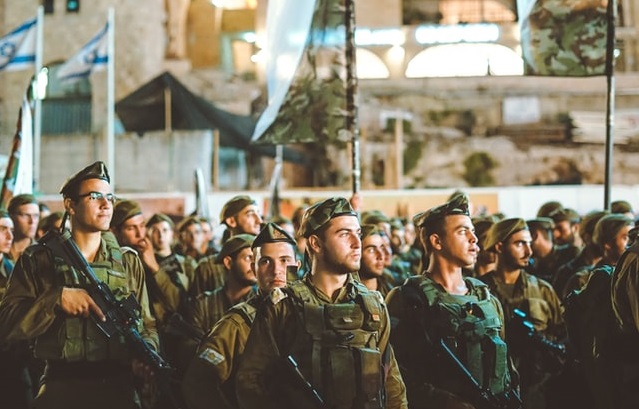
When I travel from campus to campus, meeting young, idealistic proud Jews – who, for all their heroic defiance of Jew-haters, have no idea what their Israeli peers face – I experience two contradictory emotions. First, I feel so proud of our Israeli soldier-heroes, Israel’s “greatest generation.” They sacrificed so much, served so many days, buried so many friends, endured so many traumas, absorbed so many life interruptions. Simultaneously, I note that my soldier-kids honor the heroism of their students peers abroad. My children recognize that the campus-heroes don’t have a “tsevet” – a highly-trained fighting unit of comrades-for-life – with them. They don’t always have a state backing them, and lack weapons, helmets, and flak jackets to don and deploy.
It’s a countercultural, beautiful, affirmation of Jewish peoplehood – repudiating the polarized, chest-beating, zero-sum world the legacy media and social media create. Israeli soldiers “should” resent their Diaspora peers for partying in college as they fight in Gaza. Instead, we worry about them – they worry about us. That mutual worry-fest is one secret to Jewish survival – and the emotional foundation stone which Zionism built upon and keeps expanding.
So while Israelis emphasize the seven fronts, Diaspora Jews must keep fighting on the “eighth-front” – delegitimization, anti-Semitism, anti-Zionism and war crime lies. And all Jews, worldwide, should focus on the ninth front: the battle for their souls, for the Jewish people’s soul, and for Israel’s soul.
Most people go to war to defend the status quo – the one guaranteed casualty of every war. This war in particular has rattled Israel and Israelis. Given what we’ve endured, let’s not let this crisis go to waste.
Many soldiers and reservists, so many October 7 survivors and freed hostages, have proved another cliché: there are no atheists in foxholes. Signs of a powerful, inspiring, life-altering Jewishness abound in post-October 7th Israel. They include the secular kibbutznikim who said “I was saved – Baruch HaShem” and called October 7 “the worst day in Jewish history” not just Israeli history; they resound in many memorial stickers and soldiers’ goodbye letters invoking God, heaven, and traditional Jewish language; and they explain the faith surge: 37 percent of young Israelis have greater belief in God since the war began.
Postwar, we all must go beyond the superficial. Relying on Jewish language because it’s in the air, represents a powerful victory for Zionism. Simply making many aware that shiva and shabbat and kashrut observance are Jewish not just Israeli would represent an important consciousness-raising and sensitization moment. But effective educators, activists, and politicians should push further. Here’s our best chance in years to break the Hareidi and anti-Zionist rabbinate’s monopoly on defining Judaism in the Israeli mind – bottom-up as well as top-down.
For too long, too many secular Jews abdicated – allowing the most extreme and politically savvy religious actors in Israeli society to define a “my-way-or-the-highway” religiosity – that alienated many secular Jews. It’s on those non-religious too to change, and be proactive, developing a more moderate traditionalism.
Beyond the Jewish vocabulary and rituals, this wartime awakening offers a postwar opportunity for Jews worldwide to understand that tradition, community, family, meaning are the key indicators in keeping Israelis happy, even during wartime. By adding quality of life elements like spirituality and social-communal life to the World Happiness Index’s “material” standard of living assessment, the Global Flourishing Study catapults Israel ahead of the Scandinavian countries to the fourth happiness country. Moreover, Israeli youth under 30 scored number two in the 2024 Happiness Index: headlines say “despite” their military service – I argue because of it.
Just how to depoliticize religion and free it from a controlling, reactionary minority is beyond this essay’s scope. But educationally, ideologically, the pitch should be both existential and instrumental. Zionism’s altneu, old-new, mix, combining family, tradition, and community with freedom and prosperity, should be resold to many Israelis — and to languishing Westerners worldwide.
This conversation also should take place throughout the Jewish world. Israelis – especially young Israelis – are sufficiently Westernized and TikTok-savvy to share much in common with their Jewish cousins abroad. Without triumphalism, and rejecting the obsession with politics, anti-Semitism, and “the” conflict, Jews worldwide should pioneer new kinds of global meaning-making coversations.
Tapping into what I call “Identity Zionism” builds on the Jews’ broad, left to right, religious to secular peoplehood platform. That emphasizes the ideological and communal pay-offs that come from participating in this 3500-year-old conversation called Judaism, this century-and-a-half movement called Zionism, and this 77-year-old adventure called Israel.
Beyond an ideological and identity reconstruction, Israel obviously needs a political revival. The constant call for our reservists to save us from our politicians risks becoming ritualized and drained of meaning. One approach to the political reset Israel needs begins by comparing its dysfunctional political culture with the even more dysfunctional political culture of Donald Trump’s America.
Although both democracies suffer from a searing polarizing divide stirred by demagogues from both extremes, Israel has four advantages over Americans today: a common culture, compulsory national service, the power of small, and shared enemies.
First, culturally, the fact that such high percentages of Israeli Jews observe Shabbat in some form, live on the Jewish calendar, mourn during the Yom Hashoah and Yom Hazikaron sirens, and celebrate on Yom Ha’atzmaut, creates bonding moments year-round, transcending many political and tribal divisions. Similarly, I hear a similar story from most reservists and soldiers. Yes, they spent countless hours with their buddies and know where everyone stands politically, religiously, temperamentally. But those differences don’t determine who spearheads the battle or takes out the garbage. That ability to put partisanship on mute, reflects extraordianry social strength. It can spawn the muscular moderate’s “70-30” strategy as opposed to the media and demagogues divide-in-order-to-conquer-more-eyeballs tack: emphasizing the majority of issues binding us not just the few issues dividing us.
Such bonding and its inevitable patriotism, is also why it’s essential for more Hareidim to serve in the military and for more Israeli-Arabs to do national service.
Third, unlike in America, where Blue Staters find it easy to hate Trump voters because they don’t know any, and Red Staters find it easy to demonize Democrats because they don’t shop in the same stores, Israel is really, really small. Living on top of one another makes it harder to cancel each other. The “Hareidi table” at so many weddings does reflect the ultra-Orthodox commitment to uber-separatism. On the other hand, they show up!
Finally, thank you Iran, Hamas, and too much of the world. Having common enemies sends Israelis into the same trauma zones and bomb shelters while forcing us to rely on one another and put politics aside.
Israeli tech whizzes should take the lead in outsmarting the social media alogrithms that foment division. Clearly, serious political differences and demographic tensions fuel the polarization. But social media showcases extremists while luring voters ever-deeper into their particular partisan rabbit holes.
Muscular moderates could orchestrate a moral backlash too. The Washington Post’s fact checker used to evaluate political ads and statements by assigning as many as 4 Pinocchio noses for egregious lies. Major news organizations should regularly assign from 1 to 4 “Harry Potters” and “Voldemorts” or Angels and Devils – to encourage political courage and discourage divisive demagoguery.
There is a more literal postwar reconstruction still required too. In August, 2022, celebrating the 125th anniversary of the Zionist movement’s formal founding in Basel, President Isaac Herzog championed “Responsibility Zionism.” While starting with a renewed Chalutziut, rebuilding the South and oft-neglected north, this renewed Zionism should be more ambitious, systematic. Starting with our miluimnikim and soldiers, researchers should ask young Israelis what’s missing, what do they need, and how they’re going to help solve whatever problems they identify. Then unite politicians and philanthropists worldwide to make the changes happen.
Last year, I was invited to pitch “moonshot” projects to Diaspora philanthropists – brainstorming about pragmatic gamechangers that could improve Israeli life. Nerd that I am, I started imagining educational and ideological initiatives.
Then, I asked around. My son suggested mass middle-class housing, because his 20-something miluimnik friends can’t find affordable homes. My daughter suggested investing in transportation infrastructure and tax relief, because her co-workers get to the office stressed by traffic and end the day demoralized by the high taxes they have to pay. Another relative suggested mental health initiatives, while a friend estimated that for $500 million to a billion dollars, generous donors could build a new hospital, improving Israel’s patient-to-bed ratio and creating more medical school spots to help reduce our doctor shortage.
This is the kind of proactive brainstorming and these are the courageous, risk-taking, country-saving actions we need – from Israel’s citizens, a more functional, responsive, government and loving outsiders modeling a Responsibility Zionism that reflects a rich, enduring, soaring Identity Zionism.
The writer is an American presidential historian, Senior Fellow at the Jewish People Policy Institute and a Zionist activist.