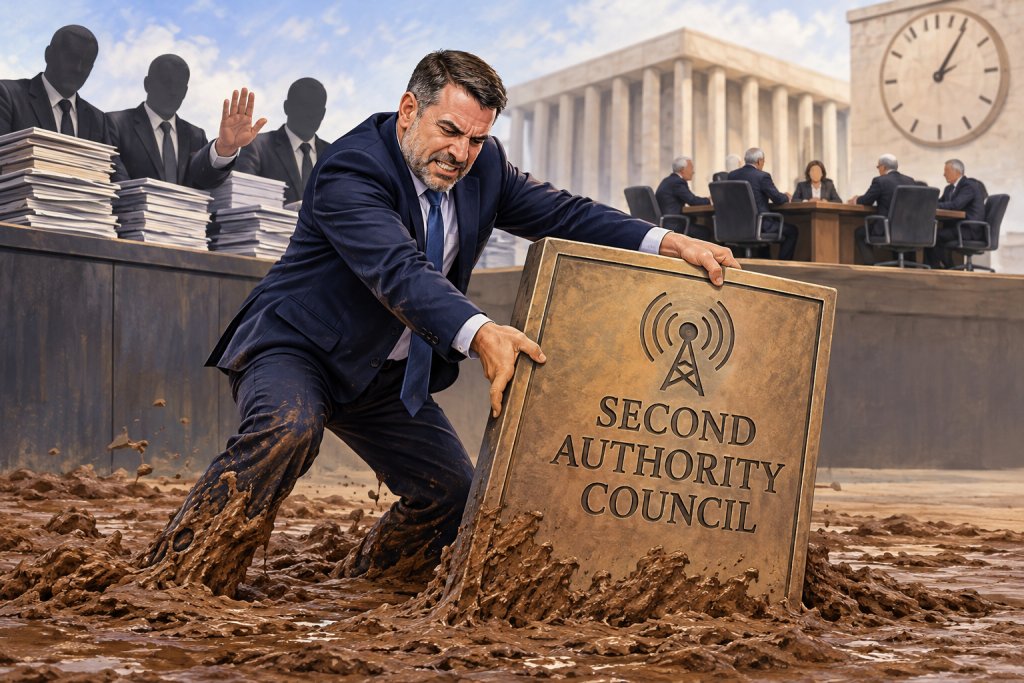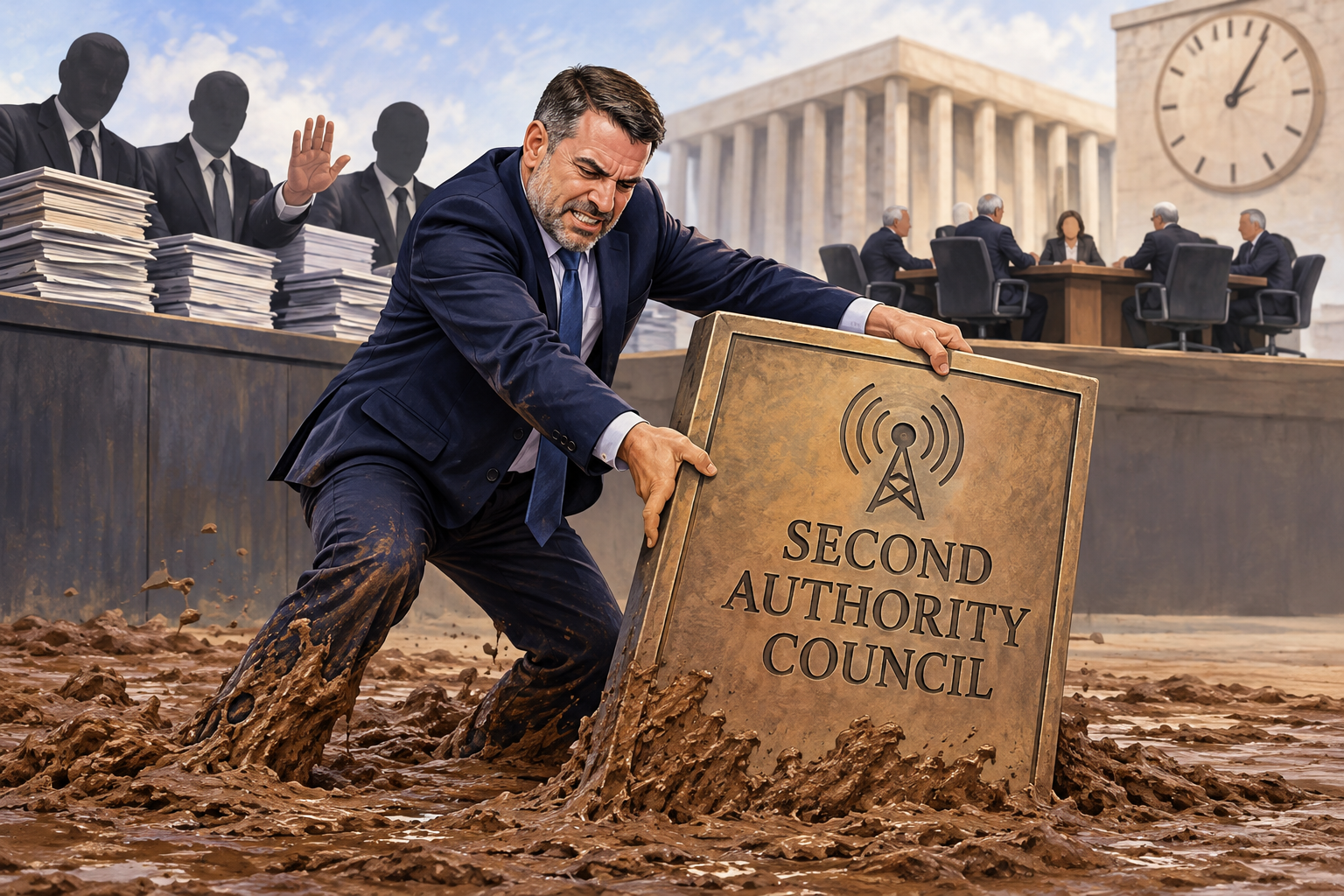
Is there a “deep state” in Israel – one that administers policy according to its own agenda while obstructing the government’s ability to function? My own personal experience can supply the answer.
Last March, Communications Minister Shlomo Karhi appointed me as a member of the Second Authority for Television and Radio Council, after the previous council, appointed by the Bennett-Lapid government, had completed its term. Shortly afterward, five petitions were filed against the Council’s appointment, raising a variety of claims directed at the Prime Minister, the appointing Minister, and three of the Council’s fifteen members. No concrete objection was raised against the remaining twelve members, a detail that is important to remember going forward.
The new council had held no more than two meetings before Bagatz (the High Court of Justice) issued an interim order that barred it from convening. Immediately afterward, the Court made a series of unprecedented decisions: it revived the previous council (despite its term having ended!), waived the legal quorum requirement in light of the resignation of seven of its members, and lifted all restrictions on the old, reduced council. All this came with an assurance that a ruling on the petitions would be issued “as soon as possible”.
The new-old quorumless council didn’t waste any time. It held several meetings and made substantive decisions on issues critical to the future of Israeli media. Contrary to custom, the minutes of these meetings have not yet been published, despite the importance of the decisions and the considerable time that has passed since they were made. And guess who is throwing their support behind the decisions of the interim council? The same Second Authority senior officials who displayed a conspicuous unwillingness to cooperate in the two meetings they held with us. And who has been sitting quietly by the entire time? The watchdogs of democracy and the knights of good governance, who petitioned against the appointment of the new council by the sitting government.
Beyond disqualifying the three Council members against whom the petitions were filed, the Court, for some reason, demanded the reexamination of the other twelve lawfully chosen members’ candidacies, against whom no objection was raised in any of the petitions.
The Communications Minister sought to act in accordance with the Court’s instructions and send our candidacies back for review, so he could finally appoint a council that would carry out his policy. To no one’s surprise, this did not go smoothly. The legal counsel announced that despite the fact that the appointments were approved more than half a year ago, and despite Bagatz‘s explicit instructions, the appointments could not be advanced during an election period. This is a good time to mention that this very same legal counsel refused to fulfill its legal role and defend the government’s position and the appointment of the new council in court.
Here we reach the end of the plot. Was it a well-planned conspiracy? I have no evidence of such. But there were definitely many elements that match the modus operandi of a deep state: a senior bureaucracy that drags its feet when it dislikes the appointments made by elected officials; the instinctive refusal of the legal counsel to defend the government’s position; the blockage of appointments on spurious grounds; and a Court that disdains the law’s provisions when it comes to a council comprised of the “wrong” people, speedily rules to suspend the new council’s work, and then dallies as long as necessary to allow the old council to reach the “right” decisions – or simply as a stalling strategy until the government is replaced.
This is a good place to stop and ask – are the people who make up the “deep state” bad people? I would like to argue that they are not. I do want to believe that they have good intentions, a sense of justice, a sense of superiority, and zero trust toward anyone who thinks differently than them. They view themselves as the gatekeepers, while the other camp’s elected officials (and their appointees) are, at best, driven by improper interests, and at worst, plunderers of the public treasury.
This, my dear leftist ladies and “Anyone but Bibi” gentlemen, is the essence of the problem: what you see as “gatekeepers”, my friends and I see as a “deep state”. The solution lies in mutual trust. Our hand is extended.
(First published in Hebrew in Mida).