
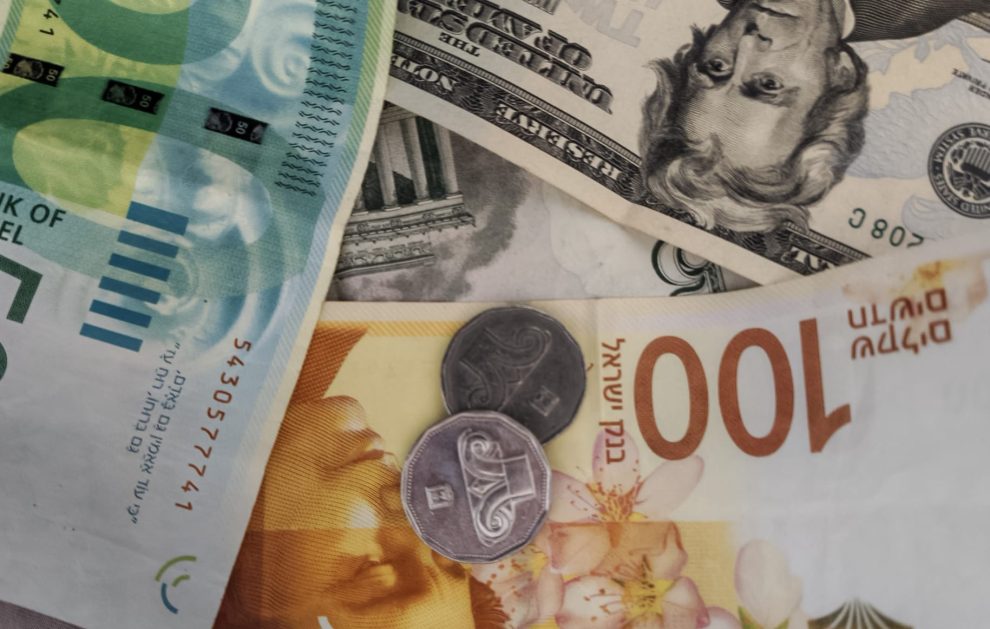
As of Israel’s 2026 Independence Day (April 22), the exchange rate stands at around 3.00 shekels to the dollar, and 3.51 shekels to the euro. This represents a sharp appreciation – both in historical terms and over a short period of time: since the Bank of Israel’s interest rate decision on March 30, which held the rate at 4%, the shekel has strengthened by approximately 5% against the dollar and close to 3% against the euro. When a currency strengthens in such a manner against both of the world’s major currencies, it becomes difficult to attribute it solely to “dollar weakness”. This is, first and foremost, an Israeli story.
The first factor is a decrease in the risk premium. Even without dramatic changes in the geopolitical realities, a reduction in the intensity of concerns – less escalation, greater stability – is enough to reduce the “risk compensation” that investors demand. The result is an inflow of foreign capital, which generates pressure for shekel appreciation. The second factor runs deeper: a sustained surplus of exports over imports in the balance of payments. In 2025, Israel recorded a current account surplus of approximately $8.9 billion (roughly 1.5%–2% of GDP), including some $3.4 billion in the final quarter alone. Beyond that, Israel has a significant net asset surplus vis-à-vis the rest of the world in its International Investment Position (IIP). In plain terms: Israel not only exports more than it imports, but it also holds more assets abroad than the world holds in Israel. This is a structural force that continues to support the shekel over time.
In recent weeks, another cyclical factor was added to the mix: sharp gains in global equity markets, and in the United States in particular. When stock markets rise, the value of Israeli institutional investors’ foreign assets grows, and they tend to increase their foreign exchange hedging – that is, selling dollars and buying shekels. At the same time, a global “risk-on” environment encourages capital flows into small, open markets like Israel. These two channels operate together and amplify the pressure for shekel appreciation precisely during periods of market rallies.
This gives rise to an important distinction: there is no exportation collapse. While a strong shekel does harm certain industries, the overall picture is very different. Exports of services (particularly hi-tech services and the sale of startup companies) maintain their strength, and defense exports contribute significantly to foreign currency inflows. In an economy generating a sustained current account surplus, it is difficult to speak of a broad problem in competitiveness across all export sectors. In fact, it is unrealistic to expect every export sector to remain competitive under continued appreciation, when the economy is already running an external surplus.
And yet, real tension does exist – and it runs through monetary policy. Inflation has returned within the target range, and inflation expectations are moderate: below 2% for the coming year and around 2% over longer horizons. Under such conditions, the economic logic supports an interest rate cut – and perhaps several cuts – later in the year. If and when this trend materializes, the interest rate differential with the rest of the world will narrow, and the upward pressure on the shekel may ease. In this sense, the very strength of the shekel today actually increases the likelihood of forces that will act to restrain it further down the line.
At the same time, we must also examine the long-term perspective. In terms of purchasing power parity, Israel is one of the most expensive countries in the developed world, and the shekel is at a high real level. This is not coincidental: economies with high productivity in advanced tradable industries tend to generate high wages and prices in non-tradable industries as well – a familiar economic phenomenon. Long-term, however, such disparities cannot widen indefinitely; they tend to rebalance, even if not in a linear or immediate fashion.
Finally, we must bear in mind that the shekel is impacted by additional domestic factors (such as the volume of inbound tourism) as well as broader global ones: fluctuations in energy prices (particularly oil), developments in the Ukraine war and its possible conclusion, the pace of global growth and the degree of appetite for risk in financial markets. All this can often, and sometimes rapidly, change the direction of financial flows and the trajectory of the exchange rate.
The conclusion is twofold. The shekel is getting stronger for good reasons: external surplus, lowered risk and rising global markets that support capital inflows. But precisely for that reason, the chances of continued sharp appreciation are steadily decreasing. The question isn’t if the shekel should weaken tomorrow, but rather when the forces already gathering under the surface will begin to exert pressure in the opposite direction.