By: Itamar Gendelman
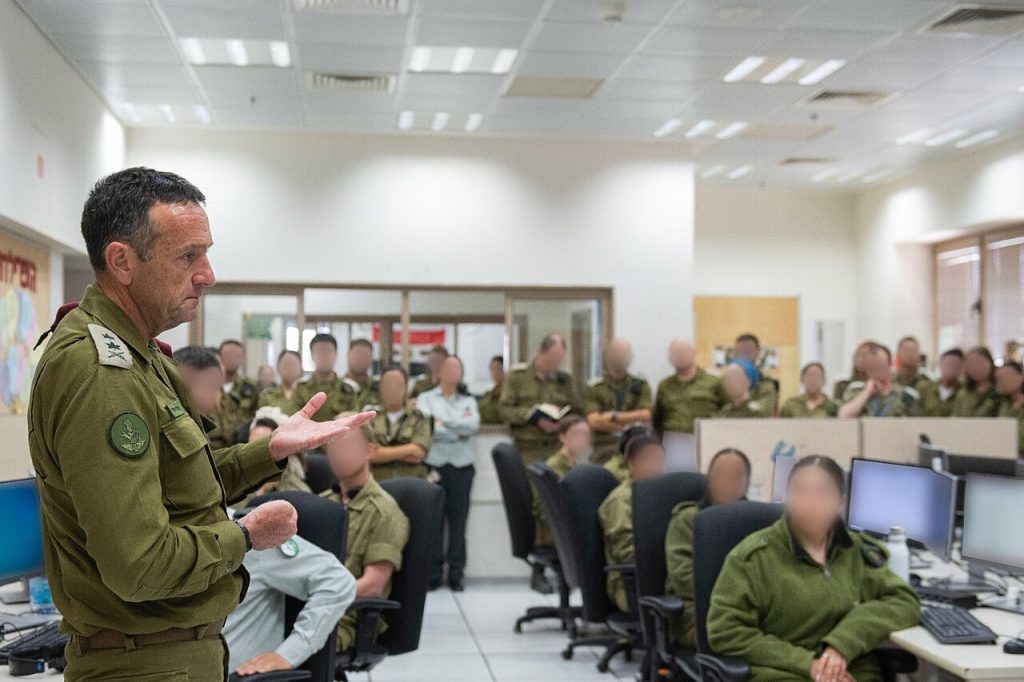
A troubling picture emerges from the IDF’s investigations into the October 7 failure: despite the fact that the Israeli defense establishment had gathered critical intelligence about Hamas’s intentions, it was neither properly analyzed nor translated into an operational warning. This failure did not stem from a lack of data, but from a far deeper problem – the challenge of comprehension. This challenge represents the gap between knowing facts and grasping their meaning, between the information collected and the story that the defense establishment tells based on that information. Prior to October 7, the story that was chosen was precisely the story Hamas wanted us to adopt – that of deterrence, achieved by the 2021 military operation “Guardian of the Walls” . Meanwhile, the real story – that of an organization planning a large-scale attack on the communities surrounding Gaza – was written in the margins by a handful of people, and left to gather dust in digital drawers.
Following the Yom Kippur War, the Military Intelligence Directorate (Aman) established a control unit, as part of its implementation of the Agranat Commission recommendations. The purpose of this unit was to reduce the risk of underestimation or institutional bias, and serve as an alternative voice that would examine raw intelligence from a different perspective than that of the regular Research Division. The control unit earned the nickname “Ipcha Mistabra” (Devil’s Advocate in Aramaic). It was recently reported that as part of the lessons of October 7, Aman chief Major-General Shlomi Binder decided to transform the “Devil’s Advocte” into an independent division with a status comparable to that of the Research Division and Unit 8200, with cross-cutting authority over all of Aman’s activities, beyond research alone.
In this essay, I will make the claim that this step, although a positive one, is far from sufficient. Overcoming the challenge of comprehension will require a much more fundamental change, both structural and cultural, that should permeate every stage of intelligence operations.
The following model can illustrate the shortcomings of the current paradigm, by explaining how different power dynamics, as they are manifest in organizational structures, would face the comprehension challenge.
There are three types of relationships between forces:
- Zero-sum game – as one force grows stronger, the other weakens (for example – light and darkness. Victory means dominance);
- Mutual growth – as one force grows, the other grows as well (for example – flowers and bees);
- Yin-yang – the forces are opposed yet interdependent, such that the existence of opposition is what strengthens each (for example – the game of paddleball, where the balance of back-and-forth is what produces the most successful play. Victory means defeat).
The current model of the Devil’s Advocate unit embodies, in practice, a zero-sum dynamic, within which the “Devil’s” position is pitted against the mainstream one, each competing for the legitimacy of its own narrative. Rather than being a system built on mutual enrichment or empowering interaction, it is built on confrontation, where the victory of one side necessitates the defeat of the other.
A tangible description of this can be found in Ephraim Lapid’s book on the Israeli intelligence forces:[1] Some of the first research produced by the Devil’s Advocate unit offered the thesis that Egypt had not given up on a military option, but was seeking to cultivate the right political conditions for an offensive move while misleading Israel as to their intentions. The conclusions of this research, which was conducted by Haim Yavetz, caused a stir when presented to scores of researchers from the Research Division. Not only were the conclusions rejected, the researcher himself was subjected to fierce personal attack. Then-Director of Aman Shlomo Gazit was furious at the reactions, reminding everyone how the very same officers had similarly rejected the possibility of war breaking out right before Yom Kippur 1973. “Have we truly learned nothing from that painful mistake?” he asked them.
This incident is a striking demonstration of how even a system that sought to expand its bounds of thinking was trapped in the logic of confrontation. The “alternative thinking” meant to fuel learning and deeper understanding became a threat that needed to be averted, rather than an opportunity that could be taken advantage of. Thus, a dynamic of polarization was created: an institutionalized, grounded stance was pitted against an external one, called upon to “prove itself” to win legitimacy. If each side is working to entrench its position and defend it from the other, the ability to listen, cooperate and keep an open mind is eroded.
This pattern echoes the idea of “groupthink”, as conceived by psychologist Irving Janis.[2] Groupthink is a phenomenon in which a group aspires to unity of thought, giving up on internal criticism and ignoring alternative possibilities. Group members tend to silence themselves, avoid expressing doubts and adopt the majority opinion as self-evident. At times, they develop a sense of moral superiority and excessive self-confidence, and refuse to engage with disturbing external information. This phenomenon is particularly common when group members are homogenous, isolated from external influences and acting under a dominant authority or in times of crisis, when the need for stability overcomes an openness to criticism.
Therefore, when a unit such as “Devil’s Advocate” exists to offer a different viewpoint, its mere existence is not enough. If it is operating within a rigid system of institutional confrontation, rather than as part of an organizational culture that accepts the value of conceptual pluralism, it will find it difficult to have an impact. Although unit members have the chance to make themselves heard, they don’t have the ability to shape the decision-making process. Instead of furthering understanding, a struggle ensues; instead of pluralism –friction.
One solution is the yin-yang model: one foundational principle that the intelligence system must incorporate in all its levels is the idea that every force needs a complementary counter-force that empowers and refines it. The fundamental challenge is to build heterogenic units in which friction leads not to breakdown, but to verification, mutual empowerment, the encouragement of critical thinking, an openness to alternatives, uncensored dialogue, and true pluralism.
To understand how the yin-yang model can be realized within intelligence units at a deeper level, we must first define what opposite forces we’re looking for. Is it gender representation? Ethnic background? Political persuasion? In my opinion, the key is to be found in foundational paradigm structures, as defined by Thomas Sowell in his book “A Conflict of Visions”.[3] Sowell sees society’s main fault lines as two contrasting worldviews: “the constrained vision” and “the unconstrained vision”.
The constrained vision is a pessimistic-realist approach to human nature, one that views man as a limited, partly irrational creature led by self-interest. Therefore, the source of knowledge is not to be found in the rationality of a single person but in accumulated historical experience, traditions, and the mechanisms of markets and spontaneous organization. Justice, according to this vision, is measured by process rather than result. Society must manage risks rather than find final solutions, and concentrated power is seen as a risk.
The unconstrained vision is an optimistic-rationalist approach that views human nature as improvable, and deems social problems solvable by educated planning. The source of knowledge is human rationality, and humans’ ability to interpret and deduct. Justice, according to this vision, is measured by results: society should aspire to actual equality even at the cost of distorting processes. Power is perceived as a necessary tool to create desired social change.
Sowell argues that the dialogue between the two visions is virtually non-existent, since they speak of the same terms (such as liberty, equality, power, justice) but grant them contradictory meanings. The first vision sees the second as legitimate but naïve, while the second sees the first as immoral or intellectually inferior. Therefore, the tension between the two is not necessarily a deficiency but carries potential: if we can balance intelligence units by integrating between both visions, we can create a system capable of self-reflection and strengthened cognitive resilience.
The tension between the constrained and unconstrained visions has a direct impact on the challenge of understanding intelligence data. According to the constrained vision, clear and uncompromising military power is a precondition for deterrence and avoidance of war. Power is perceived as a stabilizing tool that can preserve world order, even at the cost of confrontation, with the understanding that peace is achieved not through reconciliation but rather through positions of power (peace through strength). This approach is expressed in the “Iron Wall” security doctrine, according to which the state should project resolute strength in order to dissuade enemies from future confrontation.
In contrast, the unconstrained approach sees the use of power as an analytical failure or the result of miscommunication. According to this vision, conflict arises from circumstances that can be altered, and enemies are motivated by rational reasons that can be understood and addressed. This leads to the assumption that confrontations can be made superfluous through a deeper understanding of rivals’ needs, listening to their motives and finding solutions for the roots of each conflict (peace through diplomacy).
The October 7 debacle demonstrates the consequences of the unconstrained vision, such as took widespread root in the Israeli defense establishment. Classified documents prepared by the ISA only several days before the attack clearly reflect the conception prevailing among decision makers: Hamas was seen as a rational organization acting with self-restraint, and seeking economic gains while avoiding a general conflict. One of the documents noted that: “A renewed understanding between Israel and Hamas regarding security “quiet” in exchange for reducing restrictions will allow the preservation of stability for a long while. Hamas is continuing Sinwar’s strategy – advancing the terror organization’s goals without getting entangled in a battle”. Another document added: “The last period of friction ended positively for Hamas, because it achieved economic gains without getting dragged into a military conflict. In order to preserve the quiet, we must pursue an arrangement that includes significant dividends for the Gaza Strip”.[4]
The paradigm underlying this analysis – the paradigm that viewed stability as a shared interest to both sides and saw that other side as rational in similar ways to their own – is one of the implications of the unconstrained vision, and therein lies the root cause of the intelligence failure: the inability to see Hamas as an entity acting on Islamic-messianic principles, and not governed solely by cost-benefit calculations.
In conclusion, confronting the challenge of comprehension requires a shift from intelligence that operates according to the logic of a zero-sum game, in which worldviews compete for exclusivity, to intelligence grounded in the yin-yang model, in which opposites coexist in a generative tension and contribute to one another.
To further the implementation of this model, a proposal for follow-up research is offered: the development of a dedicated personality questionnaire that would assess each intelligence analyst’s tendency toward the “constrained” versus “unconstrained” vision. The questionnaire could be incorporated at the final stage of analyst training and used as a basis for the informed composition of teams, such that each unit contains the most ideal balance possible between the two worldviews. Over time, this integration would strengthen cognitive diversity, improve the system’s resilience against misconceptions, and render intelligence comprehension deeper, more complex, and more relevant.
Mr. Gendelman is a resident of Pardes Hanna-Karkur, graduate of the IDF Duvdevan elite unit and a second year student at Reichman University’s School of Government.
[1] Ephraim Lapid, The Israeli Intelligence Community: An Insider’s View (2017).
[2] Irving L. Janis, Victims of Groupthink: A Psychological Study of Foreign-Policy Decisions and Fiascoes (1972).
[3] Thomas Sowell, A Conflict of Visions: Ideological Origins of Political Struggles (2007).
[4] Report by journalist Amit Segal, “First Report: ISA Documents Sent the Week Before October 7 Massacre” N12. https://www.mako.co.il/news-military/2024_q3/Article-d0094d4ab2f9191027.htm .