
Emmanuel Navon
The “constitutional revolution” has affected Israel’s identity as a nation-state. The basic law on “human dignity and liberty” states that Israel is a “Jewish and democratic state.” But what happens when Jewish and democratic values conflict? No problem, Barak wrote in 1992: In case of a conflict, the word “Jewish” shall be interpreted by the court “with the highest level of abstraction.” In other words, it shall be ignored. Theoretically, the court could use in its rulings Israel’s Declaration of Independence, which defines Israel as a Jewish state. Yet the court itself ruled in 1948 that the Declaration of Independence has no constitutional value.
The Court’s activism, combined with the “highest level of abstraction” with which Barak interpreted Israel’s Jewishness, were soon felt. The court ruled that a Jew cannot purchase a plot of land in a Bedouin village (Avitan case, 1989), but that an Arab can build a house in a village established by the Jewish Agency (Ka’adan case, 2000). The court was petitioned twice by NGOs (in 2006 and in 2012) to cancel Israel’s citizenship law so as to impose on Israel the Palestinian “right of return” through the back door, via fictitious marriages. Though the court rejected both petitions, it did so with a razor-thin majority of six to five.
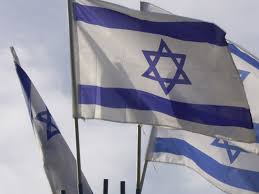
Other laws and symbols related to Israel’s Jewish identity are not immune from petitions to the High Court of Justice. The “law of return” (which grants automatic immigration rights to Jews) might one day be struck down for being discriminatory; Israel’s national anthem (which expresses the Jews’ two-millennia faithfulness to their land) and flag (which only has a Jewish symbol) could be challenged in court for ignoring the feelings of the Arab minority; and taxpayers could petition the court against spending their money on the preservation of Jewish identity in the Diaspora. Until the passing of the basic law on Israel as a nation-state, the court had no constitutional basis to reject such petitions and to protect Israel’s Jewishness. Now it does.
Opponents of the law claim that declaring Hebrew the country’s official language, while granting Arabic a “special status,” affects the rights of the Arab minority. Would they say the same of the French constitution, which establishes that “The language of the Republic is French” (Article 2) while only recognizing “regional languages” as belonging to the “patrimony of France” (Article 75-1)? Being a nation-state is compatible with the civic equality of minorities. Israel is no exception in that regard.
The right to national self-determination was recognized as a universal one by the League of Nations after World War One. The Jews are entitled to that right like any other nation. Unlike the United-States and Canada, but like most countries is the world (including in Europe), Israel is a nation-state. Yet the Jews’ right to self-determination is still being challenged both internationally and domestically. Thanks to the nation-state basic law, Israel’s Jewishness is no longer assailable at home.
(First published in The Jerusalem Post, July 18, 2018)