By: Anat Roth
The October 7 attack settled the longstanding argument between the Israeli “left”, which saw the loss of a Jewish majority as the most severe threat to the country, and was therefore willing to give up Judea and Samaria in the name of countering the demographic threat to Israel’s Jewish identity – and the Israeli “right”, which was of the opinion that the most severe threat was a withdrawal from that territory and the establishment of a Palestinian state in it, one that risked Israel’s very existence.[1]
The Gaza Strip, from which the October 7 attack was launched, was never defined as a “state”; nonetheless, the 2005 Disengagement Plan led by then-Prime Minister Ariel Sharon, that saw all Israeli communities dismantled and Israel withdrawn to the Green Line, made it a classic test case for what would happen if a similar step was taken in Judea and Samaria.[2]
In a speech he gave towards the end of 2003, Sharon presented the Disengagement Plan as “a defense-oriented and not a diplomatic move”, aimed at improving Israel’s security by ending the control over Palestinians, reducing friction between them and Israelis and drawing a clear, recognized border.[3] In another speech delivered as the Plan was implemented – three months after elections in Palestinian municipalities and the Palestinian legislative committee which both granted Hamas clear majorities in Gaza, Judea and Samaria – Sharon said that “This Plan is good for Israel in any future scenario. We are reducing the day-to-day friction and its victims on both sides. The IDF will redeploy on defensive lines, behind the Security Fence. Those who continue to fight us will meet the full force of the IDF and the security forces”.[4]
The paradigm made clear by these two speeches – one that was shared by the majority of the defense establishment leaders in the past three decades – was that Palestinian terrorism was not a strategic threat, and that even in the event terrorist organizations would continue to operate in Judea, Samaria and Gaza, Israel would know how to counter them and ensure its citizens’ security without maintaining a permanent presence in the field. Moreover, if up until the 1990’s the common conception was that maintaining a distance between population centers and the enemy, and ensuring defensive depth was necessary for security, the new working assumption was that a security fence strengthened by physical barriers, technological measures, and diplomatic arrangements would be sufficient to create a defensible border. In other words, we could disengage from the Palestinians, leave the “Palestinian problem” beyond the border, reduce the daily friction between the army and the Palestinian population, relieve ourselves of the burden of governing them, spread out on the other side of the fence and still ensure absolute security to Israel’s citizens. All of it all at once. Should the border be violated, we were assured by proponents of this view, Israel’s security forces would know how to easily remove the threat thanks to military and technological superiority. Moreover, “ending the occupation” would mean granting Israel the international legitimacy to act “with full force” to defend itself. This conceptualization was not limited to Gaza. It also guided the withdrawal from Lebanon, when then-Prime Minister Ehud Barak promised that “if a single hair of one soldier is harmed, Lebanon will be rocked”, and it served as the basis for all Israeli separation initiatives since Oslo. The idea that we could “take fate into our own hands”, mark the borders ourselves, create (as per the slogan “we’re here, they’re there”) geographical separation between us and the Palestinians without having to wait for their agreement, end the daily friction and improve security, was a fantasy that appealed to many Israelis. But on October 7, that fantasy crashed into cold hard reality and shattered into fragments.
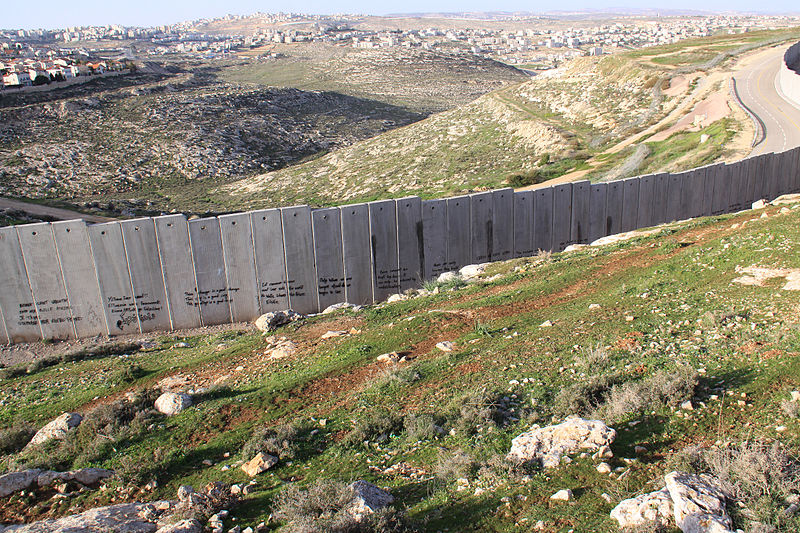
The Israeli withdrawal from the security zone in South Lebanon allowed Hezbollah to significantly strengthen and deploy an offensive, strategically meaningful array on Israel’s border, in close proximity to the border towns. The Israeli withdrawal from the Gaza Strip and the concession of control over the border between Egypt and Gaza (the Philadelphi Axis) allowed Palestinians to turn Gaza into a fortress, establish an underground city and build an army with strategic capabilities. To Israel’s good fortune, a similar move had not yet been carried out in Judea and Samaria, and Hezbollah hesitated before joining the Hamas October 7 attack. However, the invasion in the South was a clear demonstration of what would have happened if the fight had been simultaneous on all fronts, as Hamas hoped would happen: the entire sophisticated security fence, built at enormous cost to protect Israeli citizens from the threat being built beyond it, fell in one moment like a house of cards. Israel’s military superiority did not deter those who raised the banner of Israel’s destruction, the alarm system did not work, the expensive barriers did not block the invasion, and the strategic capabilities Hamas had developed, together with their close proximity to Israeli towns, made it impossible to respond rapidly and repel the enemy.
At the signal, a volley of 3,889 rockets and mortar bombs were fired into Israel, and 5,500 terrorists easily invaded through 114 breaches in the fence, while 57 drones and 6 gliders sailed over it and 7 boats bypassed it by sea.[5] Within minutes, Hamas terrorists were inside the border towns, and in less than an hour they succeeded in infiltrating 30 towns and army bases. For the first time since the War of Independence, Israeli towns were conquered (some ten towns and two army bases). A few were liberated by the IDF in a matter of hours, but some only after a full day and night. Throughout this time, terrorists from Gaza brutally murdered all in their path, among them women, the elderly and infants; raped, tortured burned and looted. 1,163 were murdered that day, and thousands more were injured, some fatally. 251 civilians and soldiers were abducted to Gaza, some of whom were murdered in captivity. It was the greatest disaster to befall the Jewish people since the Holocaust. Following the attack, the State of Israel went to war with Hamas, which turned into the longest in its history, and has yet to be won, two years on.
This paper argues that October 7 shattered three false assumptions (“conceptions”) that guided the defense establishment and many of the decision makers since the 1990’s: The primary and most meaningful assumption was that in an age of missiles and technology there is no longer any significance to territorial control, which also meant there was no longer any need for a buffer zone or strategic depth between Israel and its neighbors – especially not the Palestinian entity; Israel’s security could be ensured by “security arrangements”, such as physical barriers, technological means, diplomatic agreements and American backing. This paradigm was strengthened by two complementary assumptions. The first was that the Palestinian population was interested in living peacefully with Israel, and as such did not constitute a threat. The “enemy” that required defending against was not the Palestinian public but the Islamist terror organizations that did not recognize Israel’s existence and were sworn to destroy it. These groups tyrannized the Palestinians and used then against their will. After the terror attack Arafat instigated in September 2000, some were willing to add the Fatah and the Palestinian Authority (PA) to the list of enemies (while others still thought they were “peace partners”), but the population as a whole was still seen as innocent and capable of living side by side with Israelis. The other complementary view was that while Palestinian terrorism exacted a heavy toll on Israel, it did not constitute an existential threat.
The Importance of Holding Territory
The Traditional Viewpoint: Strategic Depth is a Vital Necessity for Defense
The armistice lines of the War of Independence (1949) left the State of Israel with borders that seemed indefensible to the heads of the newly emerged state. “Auschwitz borders” future foreign Minister Abba Eban called them.[6] “Defensible borders” was a phrase coined by Yigal Allon,[7] and it meant borders that (i) could be held by relatively small forces, (ii) that guaranteed Israel the possibility of early warning of an enemy invasion force so it would have the time to call up reserves, and (iii) provided no military advantage to potential attackers.[8] The Green Line borders do not fit this description, and the danger is greatest along the eastern border. This is first and foremost because of Israel’s narrow waist: only 15-20 kilometers separate the Green Line from Israel’s central coastal cities, and concentrated in the area between the Judean and Samarian ridgeline and the sea are 70% of Israel’s population and approximately 80% of its industrial capacity, including strategic facilities and strategically important infrastructure targets, such as the Ben-Gurion airport and Highway 6. Such distance does not afford even minimal defense depth in the case of an invasion. The second factor is that the geographical inferiority is compounded by a topographical one: the Golan Heights in the north and the Judean and Samarian hills in the center overlook the entire territory to their west, granting any enemy who controls them obvious advantages of observation, fire, and defensible positions in the case of a counterattack. It was with good reason that the Arab states were so convinced before the Six Day War that the State of Israel was a transitory episode they could easily terminate. Points of vulnerability invite aggression.
Following Israel’s victory in the Six Day War and the conquest of the Golan Heights, Judea and Samaria, Yigal Allon published a plan to shape Israel’s borders: the Allon Plan. Although never formally adopted, it became the foundational document in forming the consensus on defense that guided Israeli governments from June 1967 until the 1990’s: Israel’s borders before the war were indefensible, therefore Israel can never return to them. Instead, the state must create security zones the length of all its borders to guarantee strategic depth between the foremost line of the defensive forces and vital territory (the line of containment), to allow for a defensive campaign should Israel come under attack once again.[9] In order to halt a ground invasion from Syria and provide enough time to mobilize reserve forces to repel the attack, Israel must control the Golan Heights;[10] and in order to do the same on the Jordanian border, it must control the Jordan Valley “in the broadest meaning of that term” (as Yitzhak Rabin in his last speech to the Knesset[11], emphasized, as in accordance with the Allon Plan[12]) – in other words, up to the mountain ridge. In the Gaza Strip, Allon stressed the need for Israeli control of the Rafah crossing.[13] These borders were recognized as essential to Israel’s self-defense by the US as well, in its interpretation of UN Resolution 242.[14] In this spirit, Israel created the security zone in Lebanon in the 1980’s to ensure the Galilee’s security, and on the southern front Israel secured the complete demilitarization of the area proximate to the border through the 1979 peace agreement with Egypt, as well as severe restrictions on entry of Egyptian troops to other extensive areas throughout Sinai.
The New Paradigm: “Security Arrangements” as an Alternative to Physical Control of Territory
Throughout the 1990’s, on the backdrop of the USSR’s collapse, the end of the Cold War, the Gulf War, negotiations with the PLO, peace contacts with Syria and peace with Jordan – new winds began to blow in Israel, promising a changed world that in turn changed the dangers Israel faced:[15] the chances of ground invasions from the east weakened significantly, and the conventional warfare of armies facing off on open terrain had been replaced by rocket and missile fire towards the home front; non-state terrorism; and unconventional weapons – therefore, territorial depth and buffer zones became meaningless. In his book The New Middle East, Shimon Peres explained that the ballistic issue had replaced geographic problems, and that the physical attributes of classic strategy – natural obstacles, man-made fortifications and the distance armies must cover from assembly and deployment areas to the battlefields – were irrelevant to missile attacks. Since he also saw no military solution to unconventional weapons, he concluded that the only solution was economic and political arrangements.[16]
Over the years, this paradigm was adopted by a large portion of both past and present defense establishment leaders. “When you can fire long-range missiles, strategic depth is of no importance whatsoever,” explained former head of Central Command Amram Mitzna two decades later. “Agreements will give us greater security than strategic depth… The most important thing is Israeli deterrence, not a few more kilometers of territory. It is deterrence that prevents Hamas and Hezbollah from striking us.”[17] Danny Yatom, former Mossad Director and head of Central Command in the early 1990s, added in the same vein that “territory matters if there is a concern that a large foreign army might attempt to invade Israel. I don’t see that scenario happening in the coming years. In the Yom Kippur War, Sinai and the Golan Heights were important. But when it comes to terror cells and rockets, territory is meaningless.”[18]
This paradigm – that Israeli citizens could base their defense on political deals; depend on security arrangements (such as an assurance of demilitarization, electronic/optic control, early alert stations and the like);[19] and rely on foreign police forces and Palestinian guarantees to counter terrorism[20] (particularly after the Second Intifada, the capture of the Karine A ship and the PA’s salary payments to terrorists) instead of relying on ourselves – a fundamental principle of Israeli security doctrine – and instead of ensuring objective, physical conditions that would allow Israel’s security forces to protect its citizens in real-time – created the Israeli willingness to establish a Palestinian state on the ridgeline overlooking Israel’s beating heart up to the Green Line, in close proximity to its population centers. Moreover, this paradigm’s proponents had such high confidence in security arrangements, technology and diplomacy that many of them supported withdrawing from the Golan Heights in exchange for peace with Syria and were prepared – in order to reach an understanding with the Palestinians – to concede the eastern security zone in the Jordan Valley and allow the future Palestinian state to be contiguous with Jordan.
“The IDF can protect Israel even without the Jordan Valley”, explained Brig. Gen. (res.) Gadi Zohar, Chairman of the Council for Peace and Security: “Those who speak of Iranians marching to the border and argue that the Valley must remain under long-term Israeli control are dismissing our military strength, and are detached from the threats of the current era.”[21] An official 2011 document of the Council for Peace and Security stated that “the formula of 1967 borders with land swaps ensures adequate protection against the relevant threats” and that “the territories of the Jordan Valley and the western West Bank are irrelevant to current threats.”[22] According to the document’s authors, the Arab states posed “strategic threats” in the form of ballistic missiles and weapons of mass destruction, against which the military response should be built primarily on deterrence, early warning, and passive and active defense. The Palestinian state, by contrast, posed only the threat of guerrilla warfare and terrorism against Israel, which could be addressed through a physical barrier and political arrangements: “Peace agreements are intended to serve as an adequate substitute for control of the adversary’s territory… The central components that bear on threats of terror and guerrilla warfare are the reliability of the barrier between Israel and the Palestinian state, and the ability of a Palestinian state to prevent the construction of a terrorist infrastructure.”[23]
As Giora Eiland explains, Israeli negotiators in the early 2000’s were prepared to fully withdraw from Judea and Samaria, because the central Palestinian threat they envisioned was the suicide bomber, and sufficient to counter such a threat were the fence, intelligence, security cooperation with the PA and international guarantees; however, terrorism today has reshaped itself, intensifying the threat that the Palestinian entity constitutes for Israel. In the first decade after 2000, the suicide bomber was replaced by:
“…three types of weaponry that create problems that are very difficult to handle:
1. Rockets and missiles of different varieties, positioned throughout the West Bank, would be easily able to cover the entire area of the State of Israel.
2. Advanced anti-aircraft missiles would be capable of shooting down not only large passenger aircraft flying into Ben-Gurion International Airport, but also helicopters and even fighter planes.
3. Anti-tank missiles that are highly effective up to a range of 5 km. can easily cover not only strategic positions such as Israel’s north-south Highway 6, but well beyond, including other sites that are crucial to Israel’s defense. … The threat that these weapons pose to Israel is much more significant than that of tanks or airplanes.”[24]
In the next decade, the enemy’s arsenal expanded to include drones, UAVs and an underground tunnel network – as we saw in the Gaza Strip. Common to all three is that they are easy to manufacture, easy to smuggle, and easy to conceal in a house or basement, meaning that not only do they fail to reduce the need for strategic depth, but actually increase it.
In order to prevent a future Palestinian state from becoming a strategic threat – whether as a result of weapons smuggled across the border and the military buildup of terrorist organizations within it, as happened in Gaza following Israel’s withdrawal from the Strip in 2005 and abandonment of the Philadelphi Corridor; or as a result of it becoming a forward base for hostile regional actors – Israel has insisted on its demilitarization. But unlike demilitarization from standard military hardware such as aircraft, tanks, and artillery which “mechanisms” know how to monitor, the concept of a “demilitarized state” is almost devoid of meaning when it comes to homegrown weapons that are easy to smuggle and easy to conceal (especially today, following the advent of tunnels).
“The only way to monitor the prevention of smuggling of such types of weapons into the West Bank, or prevent their manufacture within it, is control,” argues Eiland. Israeli control of the mountain ridge is essential, he contends, also in order to “prevent the enemy from having control of the line of visibility” over the state’s territory adjacent to Judea and Samaria to the west; to ensure that “the Palestinians will not be able to control Israel’s Highway 6 and other sites with flat-trajectory weapons”; to guarantee the minimum tactical distance for the operation of the rocket defense system (the “Iron Dome”);[25] and to prevent a surprise attack of the kind that occurred on October 7. Israel’s small “waistline” lacks the minimal distance required for the deployment of Israel’s military capability to fend off an attack, should one occur. Moreover, Palestinian control of the mountain ridge can impair Israel’s ability to deal with external threats by paralyzing its ability to move forces to the Northern border, threatening gathering grounds, damaging the Iron Dome and Arrow batteries, and disrupting the movement of helicopters and airplanes.
In the resignation letter he wrote to his colleagues in Unit 8200 in the wake of the October 7 disaster, Commander Brig. Gen. Yossi Sariel argued that the “small margin of error in the region” demanded a different approach to risk management, and that “in the special reality” where “there are in fact, two Nukhba commando divisions on the Gaza border, minutes away from Israeli communities ,and with enemies that constantly meet the might of the Israeli intelligence and internalize it, you cannot rely on SIGINT deterrence for operational preparedness, and certainly not build on the fact that at the H-Hour we would manage to get the ‘golden intelligence’ report.”[26]
The topographic superiority of Judea and Samaria – which in this area compounds the problem of minimal distance – makes the risk of withdrawal from them far more severe. Shimon Peres already addressed this back in 1978, saying:
“If a separate Palestinian state is established, it will be armed to the teeth. It will also contain bases for the most extreme terrorist forces, and they too will be equipped with shoulder-fired anti-aircraft and anti-tank missiles, threatening not only passersby, but every aircraft and helicopter that takes to the skies of Israel, every vehicle moving along the main arteries of the coastal plain. There is, admittedly, doubt as to whether territorial space constitutes absolute deterrence, but the absence of a minimum territorial space places the state in a condition of absolute non-deterrence. This in itself constitutes a compulsive temptation to attack Israel from all sides. Demilitarization of the West Bank also appears to be a dubious remedy: the main problem is not securing a demilitarization agreement, but the actual implementation of such an agreement in practice. The number of agreements the Arabs have violated is no less than the number they have honored.”[27]
This danger is vastly more significant given the enemy’s current capabilities, and the potential for threat has already been motivating Iranian attempts to get a foothold in Judea and Samaria. In 2014, the Khamenei-affiliated daily newspaper Kayhan declared that arming the region “would completely change the balance of war” because “this area is in the heart of Palestine and very close to the occupied areas… Therefore, if a missile is launched from the West Bank to Tel Aviv, Haifa, Ashdod, or even the Zionist regime’s nuclear center in Dimona, there will be no need for missiles with a range of 80-100 km, but 15-20 km range missiles will suffice”.[28]
The Palestinians are not an Enemy
Even proponents of the traditional paradigm like Allon and Rabin, who understood the need for strategic depth against Arab states, did not think it was as crucial against the future Palestinian autonomy in the Gav HaHar (back of the mountain) area in Samaria. Beyond the fact that the aforementioned weaponry and their manufacture did not exist back then, the prevailing notion – both in Israel and abroad – was that there existed a clear difference between the Palestinian population, viewed as innocent and life-seeking and so one possible to live in close proximity to, and Palestinian terror organizations, who were an enemy to fight implacably against.
“We believe the two nations can live together in peace and security, side by side, on the same parcel of land” said Rabin.[29] Our enemies are “the radical Islamic terrorist organizations, Hamas and Islamic Jihad, which are joined by the rejectionist organizations”… whose “political aim [is] to murder Israelis”.[30]
This distinction, that also encompassed the distinction between the Palestinian Authority (PA) and the Muslim Brotherhood organizations, was also shattered to pieces on October 7. The outpouring of joy and solidarity with the massacre, on the part of both the Palestinian public and PA senior officials in Gaza, Judea and Samaria, which was made manifest in a series of public opinion polls conducted by The Palestinian Center for Policy and Survey Research [31] demonstrated that it was impossible to distinguish between Gaza and Judea and Samaria, between Hamas and Fatah, or between the political leadership and the Palestinian public.[32] Furthermore, the battleground that was revealed in Gaza, where the civilian population was incorporated into the war effort and “the entire city, with all its civilian institutions – hospitals, schools, mosques, academic colleges, government buildings – transformed into a fortified, multi-dimensional and reciprocally connected area”[33], with the mass participation of the Gazan public in the massacre and abuse of Israeli hostages, showed that “the attempt to present a picture of some bad people in Gaza as separate from the rest does not reflect reality”.[34]
“You can’t call them uninvolved” freed hostage Alon Ohel stressed. “Everyone there is involved”.[35]
As in Gaza, so in Judea and Samaria. As was hinted by the violent mass uprising in September 2000 (the “Second Intifada”), Israel’s working assumption must be that any violent attack on Israel will enjoy the full cooperation and backing of the Palestinian public. Finally, we must also bear in mind that both the Second Intifada and October 7 caught Israel by complete surprise, despite the early warning signs preceding both – another testament to both the failures in defining the enemy and the operational inability to prevent such an attack in the absence of permanent control of the territory.
The Threat of Terrorism as Non-Existential
“We re-emphasize that the Palestinians were not in the past, and are not today, a threat to the existence of the State of Israel,”[36] Rabin clarified in his final speech to the Knesset. Indeed, until October 7, the working assumption among both statesmen and the defense establishment was that, unlike the threat posed by Arab armies, Palestinian terrorism was a “bothersome nuisance” but not a strategic threat.[37] Terrorism “is a troubling threat, and in the worst case scenario disrupts routine for very brief periods,” explained former Chief of Military Intelligence Directorate Amos Malka, but it “is not an existential threat to Israel.”[38] In this spirit, the political and military leadership over the past two decades both treated the threat from Gaza as a “secondary threat” compared to that emanating from the north from Iran and Hezbollah. This contemptuous underestimation also crashed into the wall of reality on October 7, as it became clear that in the absence of Israeli control over the territory of the Gaza Strip and the border line between Gaza and Egypt, the mere “terrorist organization” had transformed into an army with strategic capabilities – one that is undeterred, capable of achieving surprise, and not easily defeated. Although the threat from Gaza is still not perceived as an existential threat on its own, it is clear that had the blow it managed to deliver on the southern front been accompanied by an additional one – Judea and Samaria or Lebanon – Israel’s very existence would have faced a severe test.
Summary
The threats on Israel’s northern and southern borders that materialized following the Israeli withdrawals from Lebanon and the Gaza Strip, which were revealed to their full extent on October 7 and during the War of Redemption (Swords of Iron), demonstrated once more what Israel should have learned already back in Operation “Defensive Wall”: every territory it vacates becomes the foremost outpost for an enemy intent on its destruction. Israel’s “Iron Wall” does not deter them, and they will continue their efforts to annihilate Israel no matter how many hits they take. The advanced capabilities they have amassed allows them to overcome Israel’s military and technological superiority and impose heavy losses. Therefore, every military buildup on Israeli borders must be seen as a potentially existential threat, and completely thwarted. To ensure that threats such as we have seen are not re-forming and endangering Israel’s population, Israel must return to the fundamental understanding of its founders and guarantee the existence of security zones between the state and its enemies along all its borders, which will serve to distance the threats from population centers and provide the strategic depth necessary to respond to surprise attacks.
Israel has already begun to implement these lessons: in Lebanon, it insisted on pushing Hezbollah beyond the Litani river; in Gaza, it created a security buffer zone backed by the US and restored control of the Philadelphi Corridor; and in Syria – with the collapse of the Assad regime – the IDF extended its activity beyond the armistice line and widened the security zone between the Syrian border and Israeli towns.
In the Palestinian arena, and in Judea and Samaria in particular, October 7 demands a return to a clear-eyed view of reality – one that includes the understanding that it is impossible to separate the Palestinian leadership from the population that elected it and within which it operates, and that Palestinian terrorism has transmogrified and now possesses strategic capabilities that could threaten the very existence of the State of Israel, particularly from Judea and Samaria. Therefore, the possibility of an Israeli withdrawal from Judea and Samaria must be permanently removed from the agenda, while simultaneously deepening security control over this area, dismantling all terrorist infrastructure, and continuously uprooting any emergent threats similar to those we witnessed in Gaza and southern Lebanon.
Dr. Roth is CEO of Shiloh Policy Forum, a scholar of Judean and Samarian land settlement, and author of The Secret of its Strength and Not at Any Cost, on the national-religious sector and the fight against the Disengagement Plan from Gaza.
This essay is part of the collection: Two Years Since October 7: Disillusionment, Change and Struggle
[1] See Mica Goodman, Catch-67: The Left, the Right, and the Legacy of the Six-Day War (2018).
[2] Gershon Hacohen, “What Should Be Learned from the Gaza Disengagement?”, BESA Center Perspectives Paper (2019) https://besacenter.org/gaza-disengagement-lessons/.
[3] Ariel Sharon, “Israel PM Sharon’s Speech at the Herzliya Conference Announcing the Disengagement Plan” [Hebrew] (18.12.2003) https://ecf.org.il/media_items/713.
[4] Ariel Sharon, “PM Sharon’s Statement on the Day of the Implementation of the Disengagement Plan” (15.8.2005) https://www.gov.il/en/pages/speech150805 (emphasis added).
[5] Yoav Zitun, “IDF: Over 5,500 terrorists invaded Israel on October 7”, Ynet (27.2.2025) https://www.ynetnews.com/article/h1o411xr9ke.
[6] In an interview with the German weekly Der Spiegel, Foreign Minister Eban explained that “the June [1967] map means, to us, risk and insecurity. I do not exaggerate when I say that there is something in it reminiscent of Aucshwitz. When we speculate what had been waiting for us under the conditions of June 1967 had we been defeated, we are shaken: with Syria on the ridge and us down in the valley, with the Jordanian army in line of sight from the coast, with the Egyptians holding us by the throat in Gaza – such a situation will not be repeated in our history”.
See Abba Eban, “Die Sackgasse ist arabisch“, Der Spiegel (26.1.69) https://did.li/Lc0rl .
[7] Anita Shapira, Yigal Allon, Native Son: a Biography (2007).
[8] Ephraim Sne, Navigating Perilous Waters: An Israeli Strategy for Peace and Security (2005).
[9] Avner Simchoni, “Strategic Depth and the Eastern Front”, [Hebrew] Tel Aviv University (June 2006) https://en-social-sciences.tau.ac.il/sites/socsci-english.tau.ac.il/files/media_server/government/pdf/strategic_depth.pdf.
[10] Giora Eiland, “Defensible Borders on the Golan Heights”, The Jerusalem Center for Public Affairs (2009), https://did.li/ZtkUY.
[11] Israel Ministry of Foreign Affairs, “Prime Minister Yitzhak Rabin: Ratification of the Israel-Palestinian Interim Agreement”, (5.10.95) https://www.gov.il/en/pages/pm-rabin-in-knesset-ratification-of-interim-agreement-5-oct-1995.
[12] Allon himself spoke of Israel annexing the Jordan Valley, Greater Jerusalem, the Judean Desert, and the corridor from Jerusalem to the Dead Sea. According to his plan: “A. The Jordan River and the line bisecting the Dead Sea at its midpoint shall constitute Israel’s border with the Kingdom of Transjordan [i.e., the Hashemite Kingdom of Jordan]. B. To secure a robust defensive array and establish the strategic integrity of the land, the following territories shall be incorporated into Israel as an inseparable part of the state: 1) A strip approximately 10–15 km wide along the length of the Jordan Valley… 2) A strip several kilometers wide north of the Dead Sea road, in the north of Greater Jerusalem. 3) All of Mount Hebron, or at least the Judean Desert up to the Negev…”
See the draft resolution submitted to the government by Labor Minister Yigal Allon [Hebrew], State Archives G-6304/10, p. 99 (26.7.1967) https://did.li/J8pDN.
On the Jordan Valley as a necessary security border for the State of Israel, see: Uzi Dayan, “The Jordan Valley is Israel’s Only Defensible Eastern Border”, BESA Center Perspectives Paper No. 244 (14.4. 2014) https://besacenter.org/jordan-valley-israels-defensible-eastern-border-2/; Dore Gold, “Kerry and the struggle over the Jordan Valley”, The Jerusalem Center for Security and Foreign Affairs (5.7.2013) https://jcfa.org/article/kerry-and-the-struggle-over-the-jordan-valley/.
[13] A report published by Yisrael Galili several years later (1973), affirming the Allon Plan principles, delineated how the Strip in its entirety must remain an inseparable part of Israel.
See “The Galili Document” [Hebrew] State Archives a-18/7550, p. 19-22 (3.9.73) https://did.li/td0rl.
[14] Dore Gold, “The U.S. and Defensible Borders: How Washington Understood Security Council Resolution 242 and Israel’s Security Needs,” in Israel’s Critical Security Needs for a Viable Peace, (Dan Diker, ed.) p. 32, Jerusalem Center for Public Affairs (2010) https://jcfa.org/wp-content/uploads/2012/10/israels-critical-security-requirements-for-defensible-borders.pdf ; Gershon Hacohen, “The West Bank’s Area C: Israel’s Eastern Line of Defense”, Perspectives on Middle East Security No. 160, BESA and Bar-Ilan University, p. 8 (2019) https://besacenter.org/wp-content/uploads/2019/04/160-Hacohen-ENGLISH-web.pdf.
[15] The quintessential representative of this approach was Shimon Peres, Foreign Minister in Rabin’s government (1992-1995) and Prime Minister (1995-1996). See his books, A New Genesis (1998) and The New Middle East (1993).
[16] Id.
[17] Interviewed in an article by Sarah Leibowitz-Dar, “Is the Jordan Valley a Strategic Asset for Israel?” [Hebrew], nrg, (8.11.2014).
[18] Id.
[19] See Udi Dekel, “Demilitarization – Preventing Military and Terrorist Threats From Within and By Way of the Palestinian Territories”, Strategic Perspectives No. 4, Jerusalem Center for Public Affairs (2010) https://did.li/8W9rl.
[20] See for instance, Article IX of the 1994 Agreement On the Gaza Strip and the Jericho Area (the Cairo Agreement), https://main.knesset.gov.il/About/History/Documents/GazaJerichoAgreement_eng.pdf:
“The Palestinian Authority shall establish a strong police force” except for which “no other armed forces shall be established or operate in the Gaza Strip or the Jericho Area. Except for the arms, ammunition and equipment of the Palestinian Police described in Annex I Article III, and those of the Israeli military forces, no organization or individual in the Gaza Strip and the Jericho Area shall manufacture, sell, acquire, possess, import or otherwise introduce into the Gaza Strip or the Jericho Area any firearms, ammunition, weapons, explosives, gunpowder or any related equipment..”
[21] Keren Mordechai, “Fomer IDF and ISA Senior Officials: Only Minimal Military Presence in the Jordan Valley Necessary – for the Transition Period Only” [Hebrew], Funder, (8.1.2014), https://www.funder.co.il/article/33510.
[22] “Defensible Borders Plan” [Hebrew], Council for Peace and Security (2011), https://ecf.org.il/media_items/334 .
The paper was authored by former Chief of Military Intelligence Directorate Gen. (res.) Shlomo Gazit, former Israel Air Force Commander Gen. (res.) Amos Lapidot, former Director of the Strategic Planning Division Brig. Gen. (ret.) Shlomo Brom and others.
[23] Id.
[24] Giora Eiland, “How the Changing Nature of Threats to Israel Affects Vital Security Arrangements”, The Jerusalem Center for Security and Foreign Affairs, (26.10.2010) https://jcfa.org/article/how-the-changing-nature-of-threats-to-israel-affects-vital-security-arrangements/.
[25] Id.
[26] “‘I failed, I am deeply sorry’ | Commander of 8200 intelligence unit to step down”, Israel National News (12.9.2024) https://www.israelnationalnews.com/news/396095.
[27] Shimon Peres Tomorrow Is Now [Hebrew], qtd. in HaCohen, “The West Bank’s Area C”, see note 14.
[28] Dr. Yossi Mansharof and Moshe Fuzaylov, “The Palestinian State: A Springboard for Iran’s Plan to Destroy Israel”, Misgav Institute, (22.7.2024) https://www.misgavins.org/en/mansharof-fuzaylov-an-iranian-state-in-israel-2/.
[29] Prime Minister’s announcement on the Agreement with the Palestinians to implement the Gaza-Jericho Agreement [Hebrew], Yitzhak Rabin Center (May 11, 1994) https://did.li/90pDN.
[30] Rabin, see note 11.
[31] See, for example, “Poll shows soaring Palestinian support for Hamas”, Times of Israel, (13.12.2023) https://www.timesofisrael.com/poll-shows-soaring-support-for-hamas-in-west-bank-as-90-say-abbas-should-resign/; and Ariel Oseran, “Poll: 73% of Palestinians support October 7 attacks by Hamas”, I24 News (13.6.2024) https://www.i24news.tv/en/news/israel-at-war/artc-poll-73-of-palestinians-support-october-7-attacks-by-hamas.
[32] For further reading, see Nadav Sargai From the River to the Sea [Hebrew] Sella Meir, (2026).
[33] Gershon HaCohen, “The Recent War in Comparison to the Yom Kippur War” [Hebrew], Bein Ha-ktavim (Between the Poles), Dado Center for Interdisciplinary Military Studies, (March 2025) https://www.idf.il/media/jjhdoaeu/03-%D7%94%D7%9E%D7%9C%D7%97%D7%9E%D7%94-%D7%94%D7%90%D7%97%D7%A8%D7%95%D7%A0%D7%94.pdf.
[34] Interview with Giora Eiland on Kan-Reshet Bet radio (10.6.2025), https://www.kan.org.il/content/kan/kan-b/p-9996/4240_619_20250610/.
[35] “‘I choose life:’ Ex-hostage Alon Ohel recounts Hamas kidnapping, torture, sexual harassment – N12”, The Jerusalem Post, (2.12.2025) https://www.jpost.com/israel-news/article-876904.
[36] Rabin, see note 11.
[37] Zaki Shalom and Yoaz Hendel, “The Unique Features of the Second Intifada”, Military and Strategic Affairs, Volume 3, No. 1 (May 2011) https://www.inss.org.il/publication/the-unique-features-of-the-second-intifada/.
[38] Amos Malka, “Terrorism is Losing” [Hebrew], N12, (1.12.2022) https://www.mako.co.il/news-columns/2022_q4/Article-843374cc878c481027.htm; See also Dana Blander, “Terrorism: Dangerous and Vague”, Israel Democracy Institute, (10.9.2008), https://en.idi.org.il/articles/11759.